Showing posts with label Space. Show all posts
Sunday, August 25, 2019
NASA investigating first crime committed in space: report
WASHINGTON, United States — US space agency NASA is investigating what may be the first crime committed in outer space, The New York Times reported Saturday.
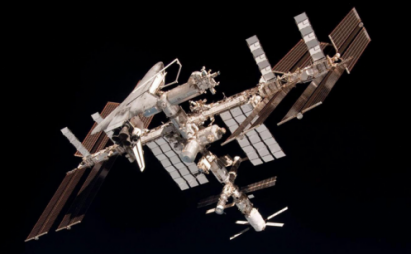
Astronaut Anne McClain is accused of identity theft and improperly accessing her estranged wife's private financial records while on a sixth-month mission aboard the International Space Station (ISS), the Times said.
The astronaut's spouse Summer Worden filed a complaint earlier this year with the Federal Trade Commission after learning McClain had accessed her bank account without permission, while Worden's family filed another with NASA's Office of Inspector General, according to the newspaper.
McClain's lawyer said the astronaut had done nothing wrong and accessed the bank records while aboard the ISS in order to monitor the couple's combined finances -- something she had done over the course of their relationship, the Times reported.
NASA investigators have contacted both women, according to the newspaper.
McClain, who returned to Earth in June, gained fame for being one of two women picked for a historic all-female spacewalk, but NASA scrapped the planned walk in March due to a lack of well-fitting spacesuits, sparking accusations of sexism.
Worden said the FTC has not responded to the identity theft report, but that an investigator specializing in criminal cases with NASA's Office of Inspector General has been looking into the accusation, according to the Times.
source: philstar.com
Saturday, August 3, 2019
Did we really land on the moon?
It’s a telling sign of our times that you can sit with your laptop and bounce around between opposing documentaries on the same subject. Take the July 1969 US lunar landing mission known as Apollo 11. One visits Netflix, and the series Conspiracies flashes in your face. One episode features the click-bait tease, “Was the moon landing a fake?”
Of course, this has been a standard conspiracy theory trope since, well, men first landed on the moon, and the Conspiracies episode does its darnedest to sow confusion and doubt about the very elaborate, expensive and meticulously planned moon mission known as Apollo 11. We’ve already seen the documentary Room 237, which amassed fringe fan theories about Stanley Kubrick’s The Shining, one of which is that the director was hired by NASA to fake the moon landing on a film set located in Area 51. The theory goes that Kubrick was later forced to keep his participation a secret, so he passively-aggressively dropped all kinds of clues in The Shining, such as Danny Torrance wearing a lumpy Apollo 11 sweater in one scene.
Nailed it!
For conspiracy theorists, all it takes is a set of adjacent facts for causality to exist. The sheer mass of evidence showing otherwise is no match for the paper-chain links that seem to suggest a government conspiracy lurks behind every shady door. The Conspiracies episode points out that astronaut Gus Grissom died in a fire inside a capsule during a NASA preflight testing, along with two other astronauts, and notes that he’d been “critical” of the moon mission just days before that.
Silenced!
Of course, more extensive research shows that the Apollo program was riddled with costly mistakes — test rockets blowing up on launch pads, jet test flights ending in disaster. Many astronauts died. Why NASA saw the need to kill off one mouthy astronaut, rather than simply cut him from the program, is something only conspiracy theorists can truly grasp.
Of course, we live in a world where truth is under fire every day. We have competing narratives huffing and puffing on our screens, attacking us with exclamation points and explosive comment threads. Navigating “the truth” is a head-spinning enterprise in the best of times, because “the truth” only exists in itself; our impression of every event passes through a subjective lens, and we are more than willing to seek assistance from outside sources when interpreting those events. Thus, we look for perspectives from shows like Conspiracies. (The uncanny is fertile ground for the conspiracy-minded. One episode looks at the “Black Dahlia” murder case, and wonders why an aspiring actress was left dead, surgically severed at the waist, in a Hollywood park in 1947. Uncanny! Creepy! Was it the work of police covering up for Hollywood moguls? Was it the mob? Was it an evil doctor afraid of blackmail? That’s the theory posited in Conspiracies, and — surprise! — there’s even a connection to the Philippines: Hollywood surgeon George Hodel, who was investigated for the murder, fled the US in 1950 to live in the Philippines until his death in 1990; his son still maintains his dad was the killer. The “Black Dahlia” remains a legitimate murder mystery, still unsolved after 70 years. Which makes it a wonderful vacuum for conspiracies.)
Most uncanny for moon landing doubters are those crisp images of astronauts, cavorting around on the lunar surface. They say it looks too real — “like a movie set.” Why is it so bright? (Sunlight hits and reflects off the moon’s surface, illuminating its every crater, as we can see very plainly every night when we gaze upward from earth.) And why didn’t the Russians ever make it to the moon? (They tried. They failed. They did send an unmanned probe that landed on the surface in 1959.)
One crystal-clear document of the moon mission comes in a new documentary released for the 50th anniversary. Apollo 11 gathers, with very little narration (save Walter Cronkite, NASA engineers and three space-bound astronauts), archival film and images from hundreds of hours of 70mm footage, some of it in hyper-real detail, gathered by NASA to record the historic launch. The film is moving, almost heart-pounding, even if you know the ending. The astronauts sit in a tiny capsule above a massive rocket, ascend into the skies as a million Floridians watch from the Cape Canaveral banks (and millions more live on television). Rooms full of engineers monitor the progress of the flight — eminently convincing, unless you believe they’re all actors or in on the conspiracy. We see the Apollo 11 capsule circle the moon and the lunar module descend on the Sea of Tranquility. We watch as Neil Armstrong steps down a ladder to touch the moon’s surface — this time in strikingly clear footage taken from inside the lunar module, not those fuzzy, high-contrast TV images sent across 186,000 miles of space through a Unified S-band and downloaded onto an FM subcarrier back on earth. The photos taken by “Buzz” Aldrin during the astronauts’ several hours of moonwalking are riveting, otherworldly — which they, indeed, spectacularly, are. (Uncanny!) They capture a location that no other human had ever managed to take a selfie on before July 20, 1969. (And only a handful since. Another conspiracy query goes: “Why didn’t the Americans go back to the moon?” They did, on five other missions during the 1970s. Remember those moon rovers, the ones designed by Pinoy mechanical engineer Eduardo San Juan? They’re still up there, as are five of the six planted US flags, according to high-resolution images taken by the Lunar Reconnaissance Orbiter in 2012.)
And finally, presented with the best available evidence — crystal-clear documentary footage — the conspiracy theorists will still shrug and say, “Well, sure, it’s easier now for NASA to fake even better footage to back up the 1969 hoax. Just look at CGI!” What can you do in the face of this kind of skepticism? Just hire a boat and live on an island somewhere, away from all the digital battles? Maybe.
Don’t get me wrong. I don’t dismiss all conspiracy theories. Governments lie, lie, lie. Political leaders lie, lie, lie. But I’m selective about my conspiracies: I cherry-pick them. I won’t take every crackpot theory as equal on its face.
The real danger of conspiracy theories is not just their seductiveness (everyone loves a mystery), but their corrosiveness. You have to ask yourself who benefits, say, when a US president contends — all available evidence to the contrary — that Russia never meddled in US elections in 2016 or that climate change isn’t happening or that the previous US president wasn’t born in America. Consider the provenance of the conspiracy peddler. Consider the motive.
But if you start from the notion that truth simply doesn’t exist — as a smug young lawyer, now working for the Duterte administration, tried to convince me during dinner one night — then all that is left is competing piles of facts. And even those facts are constantly under fire. We all become not just armchair pundits, but armchair Pontius Pilates, shrugging at every mystery: Quid est veritas? What is truth?
No wonder the truth is an endangered species.
source: philstar.com
Labels:
Apollo 11,
Astronomy,
Lunar Landing,
Moon,
NASA,
Space,
World News
Wednesday, November 28, 2018
South Korea successfully tests space rocket engine
SEOUL, South Korea — South Korea on Wednesday successfully conducted a rocket engine test launch, news reports said, paving the way for the development of its own space launch vehicle.
A liquid-fuel engine successfully propelled a single-stage rocket weighing 52 tonnes and measuring 25.8 meters (84.6 feet) long, from the Naro Space Center on the southern coast, Yonhap news agency said.
The engine, designed and developed by the Korea Aerospace Research Institute (KARI ) as part of a $1.8 billion project, will be used to propel the country's first indigenous three-stage launch vehicle -- the Korea Space Launch Vehicle-2 (KSLV-2).
"This is a significant step forward in developing a launch vehicle with our own technology," a KARI spokesman said.
It is the first such launch in South Korea since 2013 when the country successfully put a small satellite into orbit following failures in 2009 and in 2010.
But the significance of the 2013 launch was widely discounted as the launch vehicle had to rely on a Russia-developed engine for its first stage.
On its launch -- scheduled for 2021 -- KSLV-2 will use five of the newly developed engines, a bundle of four for the first stage and another one for the second stage.
Wednesday's test was deemed successful as the engine combustion was maintained for over 140 seconds during the test launch, Yonhap said.
The KSLV-2 rocket, which will be South Korea's first space vehicle wholly designed and built by itself, will be used to place satellites into the Earth's orbit and for other commercial applications.
source: philstar.com
Monday, September 22, 2014
NASA's MAVEN spacecraft enters Mars orbit
WASHINGTON DC - NASA's MAVEN spacecraft began orbiting Mars on Sunday, on a mission to study how the Red Planet's climate changed over time from warm and wet to cold and dry.
"Based on observed navigation data, congratulations. MAVEN is now in orbit," said Dave Folta of NASA's Goddard Space Flight Center just before 10:30 p.m. (0230 GMT).
The unmanned orbiter has traveled more than 10 months and 442 million miles (711 million kilometers) to reach Mars for a first-of-its kind look at the planet's upper atmosphere.
The data from the Mars Atmosphere and Volatile Evolution (MAVEN) spacecraft aims to help scientists understand what happened to the water on Mars and the carbon dioxide in its atmosphere several billion years ago.
How Mars lost its atmosphere is one of science's biggest mysteries. The answers could shed light on the planet's potential to support life -- even if that was just microbial life -- long ago.
MAVEN's findings are also expected to help add to knowledge of how humans could survive on a future visit to the Red Planet, perhaps as early as 2030.
"Mars is a cool place, but there is not much atmosphere," said John Clarke of the MAVEN science team.
"It is very cold, it is well below zero. The atmosphere is about half a percent of what we are breathing," he added.
"But we know that Mars could change and it was probably different in the past. There is a lot of evidence of flowing water on the surface from Mars's ancient history."
Mission begins
Next, MAVEN will enter a six-week phase for tests.
It will then begin a one-year mission of studying the gases in Mars's upper atmosphere and how it interacts with the sun and solar wind.
Much of MAVEN's year-long mission will be spent circling the planet 3,730 miles above the surface.
However, it will execute five deep dips to a distance of just 78 miles above the Martian landscape to get readings of the atmosphere at various levels.
NASA is the world's most successful space agency at sending rovers and probes to Mars, and past missions have included the Viking 1 and 2 in 1975 and the Mars Reconnaissance Orbiter in 2005.
The US space agency's latest robotic vehicle, Curiosity, is exploring Gale Crater and Mount Sharp, looking for interesting rocks and returning data on whether the Martian environment shows evidence of a past ability to support life.
Later this week, an Indian spacecraft, the Mars Orbiter Mission, will be on course to reach Mars.
The unmanned MOM probe is set to enter Mars's orbit in the next few days after 10 months in space, marking India's first mission to the planet to search for evidence of life.
"We are not the only show that is happening on Mars this week," said Gary Napier, a spokesman for Lockheed Martin, during a NASA television broadcast of the orbital insertion.
"Everyone at NASA and its partners wishes that team all the best."
source: interaksyon.com
Friday, March 15, 2013
Canadian space station commander floats through chat with school kids
MONTREAL -- The Canadian commander of the International Space Station delighted schoolchildren in a live question and answer session conducted from space on Friday.
Chris Hadfield, who became the first Canadian to take command of the ISS on Wednesday, thrilled his young audience as he floated around during the grilling before signing off with a somersault.
The Q&A was moderated by Canadian Prime Minister Stephen Harper and was broadcast live on television.
Hadfield reflected on a range of questions, including the occasional fears he encounters in space, as well as the awe he feels observing Canada from his vantage point more than 330 kilometers (205 miles) above Earth.
"It is a great way, every time, to wait for Canada, to come around the world again, it just warms my heart, every time, to see the potential of our country and to see the way that we live there together," Hadfield said.
However, the most striking country visible from space is the Bahamas, Hadfield revealed.
"Because of the coral reefs, the colors are absolutely incredible, all the different blues, the different hues of blue, like a rainbow under the water," he said. "It is absolutely incredible to see it. It is beautiful."
Harper wrapped up the session by paying tribute to Hadfield's pioneering spirit.
"You represent the kind of spirit we had in the explorers who found our country and built our country and you are carrying that into a modern age," Harper said. "We are proud of you and we wish you good luck and success."
source: interaksyon.com
Subscribe to:
Posts (Atom)