Showing posts with label LGBT. Show all posts

Tuesday, August 18, 2020

Artists, academics defend LGBT rights in Poland


WARSAW, Poland (AP) — Dozens of authors, artists and scholars — including writer Margaret Atwood and film directors Pedro Almodóvar and Mike Leigh— have expressed outrage at the hostility being directed toward LGBT people in Poland by the country’s president and other politicians.

In what they called a letter of “solidarity and protest,” they wrote to Ursula von der Leyen, the president of the European Commission, calling on the European Union to defend human rights values “being blatantly violated in Poland.”

“Homophobic aggression in Poland is growing because it is condoned by the ruling party, which has chosen sexual minorities as a scapegoat with no regard for the safety and well-being of citizens,” the letter said.

The letter, dated Monday, comes amid a bitter cultural clash in Poland, where calls for greater rights for LGBT people have been met with a furious backlash from the powerful Roman Catholic church and the right-wing ruling party, Law and Justice.

President Andrzej Duda, a party ally, won a tight reelection in July after a campaign vowing to defend the country’s traditional Catholic identity. He called the LGBT rights movement move dangerous than communism.

In the letter, also signed by Poland’s Nobel laureate for literature Olga Tokarczuk, came to the defense of activists who have been detained this month for protesting the anti-LGBT rhetoric.

“We speak out in solidarity with activists and their allies, who are being detained, brutalized, and intimidated,” the letter said. “We voice our grave concern about the future of democracy in Poland, a country with an admirable history of resistance to totalitarianism and struggle for freedom.”

Recently the EU did react by rejecting small amounts of funding to six communities that had declared themselves to be “free of LGBT ideology,”

On Tuesday, the Polish justice minister, Zbigniew Ziobro, said that one of those communities, Tuchów, had become the victim of “ideological persecution” by the EU and that his ministry was earmarking 250,000 zlotys ($68,000 or 57,000 euros) to support it from a special fund.

He praised the town for what he said was the support of “well-functioning family” life.

Associated Press

Saturday, June 29, 2019

Color of money: Are brands buying into or cashing in on the LGBT community?


MANILA, Philippines — In July 2016, Smart Communications — the wireless arm of telco giant PLDT, Inc. — came out with a heart-warming TV advertisement targeting a market that had long been ignored by many companies.

In the TV ad, a gay man was debating whether he would accept his father’s friend request on Facebook. As he scrolls through his Facebook profile filled with pictures of him and his partner, the son finally decided to hit the “confirm” button.

“Dad, inaccept na kita (Dad, I’ve accepted you),” read the gay son’s message to his father.

“Anak ako rin (Me too, son),” the father replied. The ad, which went viral on social media, ends with this message: Break barriers for new beginnings.

Five months later, PLDT’s rival Globe Telecom, Inc. released a gay-themed commercial for its international roaming service. The Globe ad features a Pinoy tourist who was smitten by a Thai boy in Bangkok.

With the recent emergence of LGBT-targeted ads in the Philippines, are businesses in Asia’s biggest nominally Catholic nation starting to realize that tapping the gay market makes financial sense?

The ‘pink’ market

Many LGBTs exercise a big role in decision-making in the family, including finances, and some companies in the Philippines are now acknowledging the community’s buying power, which "should never be ignored," said Niño Jose Gonzales, a copywriter at advertising agency BBDO Guerrero.

But Gonzales said businesses in the country “still have a long way to go” especially in creating more LGBT-oriented ads.

In 2015, homegrown fashion brand Bench stirred up controversy when it blacked out the hands of a gay couple for an ad on a billboard on EDSA-Guadalupe, triggering a social media campaign called #PaintTheirHandsBack.

According to reports, Bench later explained that its billboard — which was used to promote the company’s "Love All Kinds of Love" campaign — was not defaced as initially assumed by social media users but censored because the Ad Standards Council "rejected photos of the couple looking lovingly at one another, citing ‘traditional Filipino family values’ as a reason."

Niche market in a conservative country

Meanwhile, many firms don’t see the need to target the LGBT market, arguing that members of the community are already included in the male and female population.

Many corporations are also hesitant to spend millions on ad campaigns targeting a minority sector.

"I think pink money has always been there. As we humans have diverse interests and priorities, members of the LGBT will spend on and distribute their pink money on things that they need and hobbies that interests them. We go to the gym. We spend on groceries. We go on vacation, the list continues," Gonzales, who also teaches marketing and advertising at De La Salle University in Manila, told Philstar.com.

"But to have companies cater exclusively to a niche market, especially in a conservative country like ours, is not yet common," he added.

Results of the “Project Pink” study conducted in 2011 by the Philippine Survey Research Center (PSRC) showed one in 20 Metro Manila residents openly identifies as a member of the LGBT community.

Adding those who are “in the closet,” actual numbers would be higher.

“Interestingly, bisexuals and transgendered individuals have significantly higher purchasing power than straight people,” Andrea Dizon, PSRC associate account director, was quoted as saying in a 2013 article by BusinessWorld. “In fact, awareness for brands is higher among the LGBTs.”

'Most products are biological gender specific'

But for Jade Ilagan, strategy director at independent advertising agency IdeasXMachina, measuring the power of pink money is a difficult task.

"In terms of pink money, I am not so sure about the power it has currently. I don’t think also that there is a way to gauge it as most products, if not all, are still biological gender specific,” Ilagan explained in a separate interview with Philstar.com.

"Take for example sanitary napkins. This product will always benefit from money coming from women, regardless if they are members of the LGBT. I am unaware of products that are sexuality-specific," he added.

"In terms of advertising, I think we are currently doing it. We’ve seen commercials from Bench, Smart, that focus on LGBT-related topics like coming out and acceptance. These forms of advertising could be the ones that encourage purchase from pink money, although it still couldn’t be exclusive," he continued.

Cashing in on Pride month?

LGBT Pride is celebrated in more than 60 countries every year, mostly in June.

This month, companies like Adidas and H&M created rainbow merch to mark the celebration of the Pride movement — a stark contrast to the past when businesses were afraid to associate their brand with LGBT marches and parades.

"I do agree that Philippine companies are now slowly showing their support towards the LGBT community. We see campaigns that foster inclusivity and acceptance towards gay people," BBDO Guerrero's Gonzales said.

"I just hope that these efforts come from well-meaning intentions rather than just a ploy to attract the community for us to support the brands that label themselves as our ally. We know a good soul when we see one," he added.

With big and small businesses wanting a bite of the LGBT market, advocates fear corporations are exploiting a group that has been historically neglected.

Ging Cristobal, project coordinator for Asia at OutRight Action International, said that while LGBT-targeted ads give visibility, companies must tread lightly to avoid perpetuating stereotypes that may further harm the gay community.

Last year's Pride March included statements on the political climate in the Philippines as well as support for workers who were on strike against a condiments giant. With this year's emphasis that Pride is a protest, the community is even more on guard against being used by corporate brands.

A march on Friday to commemorate the 1969 Stonewall riots in New York also put the spotlight on labor contractualization, issues of Philippine sovereignty, and alleged attacks on farming communities, alternative news website Bulatlat.com reports.

The same report quotes "Marky" of LGBTQIA+ group Kasarianlan as saying the community cannot be free until everyone is "because every sector has a member of [the community], be it on the peasants’ sector, fisherfolks, a contractual employee or a student."

Is visibility enough?

The visibility that "pink" ads bring may also not be enough to muster support for legislation that aim to protect the LGBT community, Cristobal also said, adding that it is still up to advocates to convince and educate lawmakers.

In the Philippines, the Senate failed to tackle the anti-discrimination bill before the 17th Congress ended.

The proposed Sexual Orientation, Gender Identity and Expression Equality (SOGIE) bill was meant to address, penalize and prohibit "discrimination, marginalization, and violence on the basis of sexual orientation, or gender identity or expression" and to promote non-discrimination through government programs and initiatives.

According to House Bill 4982, sexual orientation is to whom "emotional, sexual attraction, or conduct" is directed while gender identity is "the personal sense of identity as characterized, among others, by manner of clothing, inclinations, an behavior in relation to masculine or feminine conventions."

Gender expression, meanwhile, is "the communication of gender identity through means such as behavior, clothing, and hairstyles, communication, or body characteristics."

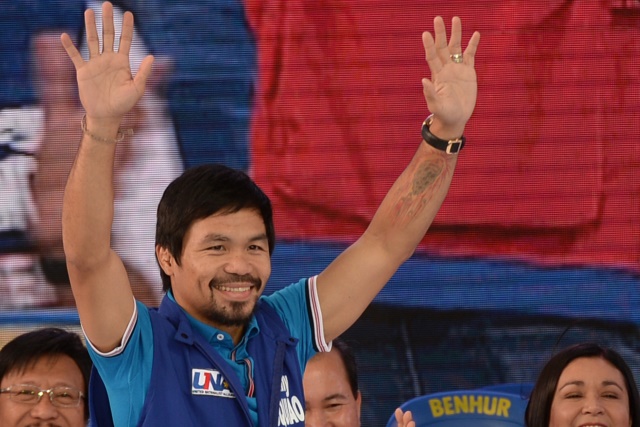
Senators—including Sen. Manny Pacquiao, who is known to base his legislative positions on the Bible—were cool to the idea. Pacquiao argued on the Senate floor in 2017 that "even in the Bible, we can read that women should wear women's clothes and men should wear men's clothes."

He said that not doing so could lead to "fraud" and even put LGBT people in danger, implying that the death of transwoman Jennifer Laude at the hands of US Marine Joseph Scott Pemberton was because she had "fooled" him.

Even President Rodrigo Duterte, who has been quoted as saying LGBT people should not be ashamed of who they are, uses gay as a slur, claiming in February that 40% of communist rebels are gay, and in December 2018 that 90% of priests are.

Had the Senate passed the bill and had it been signed into law, it would have penalized discrimination in, for example, hiring and advancement at work and in refusing services because of a person's SOGIE.

It would also have prohibited and punished "harassment, coercion, or threats from members of institutions involved in law enforcement and the protection of rights on the basis of SOGIE" as well as "outing" someone without their consent.

The 19-year-old measure — which hurdled the House of Representatives in 2017 — will have to be re-filed in the next Congress like other pending bills.

More progress has been made on a local level, with Transgender Philippines noting in 2017 that anti-discrimination ordinances have been passed in 15 cities and one town—including Quezon City and the regional centers of Baguio City, Cebu City, and Davao City.

At the provincial level, Agusan del Norte, Batangas, Cavite, Dinagat Islands, and Iloilo have similar ordinances.

Good intentions, not-so-good execution

Meanwhile, a June 2018 Social Weather Stations survey found that 61% of Filipinos say they will oppose any law that will allow civil union of same-sex couples.

"Capitalism and the ads that businesses create can give visibility. But the question is: What kind of visibility? Do they perpetuate and maintain the stereotypes or do they go beyond the stereotypes and help LGBT activism — maybe show balanced information, balanced messaging?" Cristobal told Philstar.com in a mix of English and Filipino.

"Sometimes, businesses and capitalists don’t know better... Their intention is good but the execution is not that good because they are unwittingly perpetuating stereotypes, thereby causing further discrimination and abuse," Cristobal added.

"The right move is for businesses to engage with activists so they’ll know what will help the community... Advertising agencies should also engage with activists and attend workshops on SOGIE so we can influence how they will execute the campaign of that particular company," Cristobal also said.

source: philstar.com

Monday, June 24, 2019

Gay Pride parade engulfs Sao Paulo despite unease over Brazil's conservative turn


SAO PAULO, Brazil — One of the world's largest LGBT Pride parades took center stage in Sao Paulo on Sunday, with the carnivalesque festivities tinged with unease over Brazil's conservative political climate under President Jair Bolsonaro.

Tens of thousands of people took part in the annual march through the heart of Brazil's economic capital, traditionally an exuberant celebration of camp, color and fantasy.

But this year, many participants said they were turning out because they feel their liberties are increasingly under threat.

"I came to fight against homophobia and disrespect," said 31-year-old Monique Barber, who said she faced verbal attacks at the start of the march.

"We have a homophobic politician and we are seeing things go backwards. Just imagine being attacked at the LGBT march itself," she said.

Bolsonaro, a right-wing ex-army officer who was elected president last year, has a long history of homophobic, racist and chauvinist remarks.

Since taking office January 1, he has doubled down on that anti-gay posture, calling a recent Supreme Court decision criminalizing homophobia "an error."

Bolsonaro, who is Catholic, has strong support from Brazil’s growing Evangelical community.

This week he became the first Brazilian president to join the annual "March for Jesus," also held in Sao Paulo, an event that attracts Evangelical faithful from around the country.

Marina Fernandes, 19, said she was taking part in the march for the first time in support of LGBT rights, although she identifies as heterosexual.

"I came because I feel empathy and because I believe in respect for others. You don't have to be homosexual for that," she said.

Nineteen sound vehicles ran the length of the parade route, laden with music acts that include Spice Girl Mel C, as well as the Brazilian performers Karol Conka, Iza and Luisa Sonza.

'50 Years Since Stonewall'

This year's theme is "50 Years Since Stonewall," in tribute to the protests at a New York gay bar in 1969 that helped launch the modern LGBT rights movement.

Pedestrian crossing lights on Paulista Avenue were retouched for the event; instead of the traditional red and green, they flash same-sex couples.

A medical station displayed enormous rainbow decorations, and some businesses joined in, draping storefronts with the movement's symbolic colors.

"Prejudice has a cure, through education," read a sign borne alongside the parade's lead sound truck.

"I define myself as powerful," said a smiling Jonathan Alves, 27, ducking discussion of his sexual preference.

Wearing black pants and bra, his lips daubed with pink lipstick, Alves said he had overcome his fears to take part in the march for the first time.

"You have to come because it helps you accept yourself. Some people hide their entire lives and it's important to accept yourself, and even more so to show that we are no different," he said.

Brazil under Bolsonaro is a scary place, said demonstrator Felipe Ferreira, 27.

"We have a homophobic government that promotes and facilitates the carrying of weapons. A president that does not believe that homophobia is a crime, and who empowers intolerant people," he said.

Ferreira, who lives in the Sao Paulo area, said that the LGBT community outside of the big cities is extremely vulnerable.

"Just holding hands with your partner could cost you your life," said Ferreira, who was shirtless and had a rainbow flag tied around his neck.

source: philstar.com

Sunday, June 2, 2019

South Korea's pride parade marks 20 years in blaze of color


SEOUL, South Korea — Tens of thousands of LGBT South Koreans and their supporters paraded through central Seoul Saturday for the capital's 20th gay rights march, with ruling Democratic Party members taking part for the first time.

The parade, some 70,000 strong according to organisers, made its way through the South Korean capital with participants dancing on open truck beds and waving rainbow flags.

"People who used to be invisible are here to show that they exist," said Jeong Min-hee, a 26-year-old participant.

"It's so much fun, I'm very excited and it feels so good to be in solidarity with others."

South Korea is Asia's fourth biggest economy and a capitalist democracy, but lived through decades of military rule when evangelical Christianity was widespread and framed the communist North as evil.

Christian churches still have enduring political influence in the South, and they are now targeting sexual minorities, activists say.

"The conservative Christians consider both -- communists and sexual minorities -- as deserving to be demonised in South Korean society," said Lim Bo-rah, a senior pastor at an LGBT-friendly church in Seoul.

But changes in society are afoot. Members of the ruling, left-leaning Democratic Party (DPK) participated in the event for the first time this year and CASS, one of the South's largest beer brands, on Friday became the country's first major company to openly support gay rights.

The South Korean President Moon Jae-in -- a former human rights lawyer -- has spoken only vaguely on gay rights. His political rivals and LGBT activists say he is trying not to alienate supporters.

As the front-runner in the presidential race in 2017, Moon said in a television debate that he "opposed" homosexuality in the military.


-'We were invisible'-


"We decided to participate because we wanted to show that LGBT people and their allies exist even within the ruling party," said Kim Min-seok, one of some 30 DPK members who showed up at the parade, waving the party flag.

"I often felt we were invisible within the DPK -- many members wouldn't even think about the possibility of our existence", Kim said.

The participation of the ruling party's members was announced prior to the event and sparked intense controversy, triggering the spokesperson for the main opposition, conservative party Min Kyung-wook to say the Democrats should "come out" as a "queer" party.

Homosexuality is not illegal in South Korea but there is currently no legislation outlawing discrimination.

It is also the world's only advanced economy to make consensual gay sex between soldiers a crime under military rules.

It is a marked contrast to Taiwan -- which also has Confucian cultural components, a history of dictatorship, and has enjoyed an economic boom in recent decades.

But earlier this month Asia's first gay marriages took place on the island after it legalised the change.

Activists say the difference is religion: South Korea has proven fertile ground for religious groups that offered comfort and salvation that appealed during times of deep uncertainty following the Korean War.

Now more than 20 percent of South Korea's population are Protestant Christians, surveys show, compared to about five percent of Taiwanese.

Thousands of Christian protesters turned out to protest the event on Saturday, holding up signs that read "Repent and come back to Jesus. He loves you."

A cross-section of society were present, including buddhists, Korean-American adoptees, asexuals and parents of sexual minorities.

In previous parades, "young LGBT people would come to us and cry in arms whenever we gave them free hugs," said Lee Sun-young, who works for Parents and Families of LGBTAIQ people of Korea.

"We always remember them. I hope they know that the world is changing, although slowly."

source: philstar.com

Friday, May 17, 2019

Taiwan's parliament approves same-sex marriages in first for Asia


TAIPEI, Taiwan — Taiwan's parliament legalized same-sex marriage on Friday in a landmark first for Asia as the government survived a last-minute attempt by conservatives to pass watered-down legislation. 

Lawmakers comfortably passed a bill allowing same-sex couples to form "exclusive permanent unions" and another clause that would let them apply for a "marriage registration" with government agencies.

The vote—which took place on the International Day Against Homophobia, Transphobia and Biphobia—is a major victory for the island's LGBT community who have campaigned for years to have equal marriage rights and it places the island at the vanguard of Asia's burgeoning gay rights movement.

In recent months conservatives had mobilized to rid the law of any reference to marriage, instead putting forward rival bills that offered something closer to limited same-sex unions. But those bills struggled to receive enough votes.

Gay rights groups hailed the vote on Friday, saying the ability to apply for a "marriage registration"—known as Clause Four—put their community much closer to parity with heterosexual couples.

"The passage of Clause Four ensures that two persons of the same-sex can register their marriage on May 24th and ensure that Taiwan becomes the first country in Asia to legalize same-sex marriage and to successfully open a new page in history," said the Taiwan Alliance to Promote Civil Partnership Rights.

Court order 

Two years ago Taiwan's top court ruled that not allowing same-sex couples to marry violates the constitution with judges giving the government until May 24, 2019 to make the changes or see marriage equality enacted automatically.

Other key sections of the law were still being debated and voted on Friday, including what, if any, provisions there will be for same-sex couples to adopt.

Whatever the result, the law will not bring full parity with heterosexual couples as even the most progressive version only offers biological adoptions.

Gay rights groups had previously indicated they were willing to accept compromises, as long as the new law recognized the concept of marriage, adding they could fight legal battles over surrogacy and adoption down the line.

"In Taiwan a marriage will take effect when it's registered, so allowing marriage registration is no doubt recognising the marriage itself," Victoria Hsu, a gay rights lawyer, told AFP.

Families divided 

In the last decade, Taiwan has been one of the most progressive societies in Asia when it comes to gay rights, staging the continent's biggest annual gay pride parade.

But the island remains a staunchly conservative place, especially outside urban areas.

Conservative and religious groups were buoyed by a series of referendum wins in November, in which voters comprehensively rejected defining marriage as anything other than a union between a man and a woman, illustrating the limited popular support.

In a Facebook post President Tsai Ing-wen said she recognized the issue had divided "families, generations and even inside religious groups".

"Today, we have a chance to make history and show the world that progressive values can take root in an East Asian society," she added in a tweet ahead of the vote.

Tsai had previously spoken in favour of gay marriage but was later accused of dragging her feet after the court judgement, fearful of a voter backlash.

Taiwan goes to the polls in January.

Thousands of gay rights supporters gathered outside parliament for the vote, despite heavy downpours.

"We are just a group of people who want to live well on this land and who love each other," gay activist Cindy Su told the crowd.

But opponents were incensed by the vote, saying the inclusion of the "marriage registration" clause ignored the referendum.

Tseng Hsien-ying, from the Coalition for the Happiness of Our Next Generation, told local media the vote "trampled on Taiwanese people's expectations that a marriage and a family is formed by a man and a woman, a husband and a wife".

Australia and New Zealand are the only places in the wider Asia-Pacific region to have passed gay marriage laws.

Taiwan is the first place in Asia to do so.

Vietnam decriminalized gay marriage celebrations in 2015, but it stopped short of full legal recognition for same-sex unions.

source: philstar.com

Sunday, March 24, 2019

Colombia holds gay Miss Universe beauty pageant


MEDELLÍN, Colombia — The Colombian city of Medellin holds its Gay Miss Universe Beauty pageant where transsexuals and drag queens take to the stage and represent a country of their choice after weeks of practicing choreographies and catwalks.

Nine candidates in total, 8 Colombians and 1 Venezuelan, participated in this year’s Miss Universe Gay in Colombia.

Each participant chooses which country he or she wishes to represent .

2019 was the second version of this specific competition, even if according to the organizer there are between 4-8 competitions like this in Colombia per year.

The competition isn’t officially part of Miss Universe The objective is more the creation of a space for the LGBTI community to have fun in and put on a show.

The winner receives certain prizes, of which there is wigs, a million pesos (330 $US) and a ticket to take part in Miss Gay International which takes place in Bogota.

The bar becomes packed for the competition. On March 16th, around 300 people arrived to watch the show which takes places between 11pm and 4am.

source: philstar.com

Wednesday, October 10, 2018

Gay activists seek 'freedom' at Kosovo pride parade


Pristina - Hundreds of people took part in a gay parade in Pristina on yesterday, demanding "freedom" and "equal rights" in patriarchal and Muslim majority Kosovo.

Waving rainbow flags and banners bearing the motto of the parade "In the Name of Freedom", they marched through Pristina's main street, saying they were "walking for those who can not join us".

"Today we are united to seek freedom and show society that we have equal rights with others," Lend Mustafa, a 22-year-old transsexual man, told the crowd.

Organisers of the march said it "aims to raise awareness, empower LGBT people and increase visibility in Kosovo society for different sexual orientations and gender identities".

Despite a liberal constitution, many Kosovo gays are not coming out publicly as LGBT activists warn of growing difficulties in defending their rights.

"The main challenge is that we live in such conservative families that they don't get it that a lot of their children are part of this community," said Rina Krasniqi, 20, wrapped in a rainbow flag.

"They don't support their children, using hate words against them."

A 2015 study singled out Kosovo as the most homophobic country in the Balkans, with LGBT people facing discrimination in all areas of life.

More than 80 percent of Kosovo's LGBT community interviewed for the study by the US-based National Democratic Institute (NDI) said they had been subjected to psychological abuse because of their sexual orientation.

Twenty-nine percent reported being victims of physical violence.

Unlike the previous year, when Pristina hosted its first gay pride parade, European Integration Minister Dhurata Hoxha was the only Kosovo official to attend the event, which was held under heavy police presence.

But some foreign diplomats, including ambassadors of France, Germany and special EU envoy, did take part, marching at the front of the parade.

source: philstar.com

Friday, June 29, 2018

Are you with me?


MANILA, Philippines — As more and more people become aware that all people deserve to be equal, more and more people are showing support for the LGBTQ+ community. That’s great! Pride Month has never been more alive than it is today. That’s great. There are more and more commercials and campaigns that include queer people in the mainstream: gay people getting married, gay people buying houses, gay people having kids, gay people being accepted by their parents in tearjerking ad spots. That’s great. But — and there is always a “but” — being an ally in 2018 doesn’t just mean waving a rainbow flag and calling it a day. Are they still allies once June is over?

Here’s the thing: people, groups, brands, corporations and politicians who try to be inclusive are good and all, but there has to be meaningful support behind it. Because the LGBTQ+ community is still a minority, and it’s going to take more work to make everyone truly equal. Are they amplifying LGBTQ+ voices, or are they drowning them out instead? Are they fighting for equal rights, or do they only show support when it’s convenient and become silent when issues arise? Are they donating to projects and causes like Pride marches, or are they simply trying to capture the market?

Don’t get me wrong — it’s nice to see rainbows where they didn’t exist before, and it’s nice to be represented, but sometimes you just gotta think: are they with me or just trying to sell to me? Being part of the LGBTQ+ spectrum is not a trend to be followed nor is it some bandwagon that people need to jump on. These are identities, struggles, and lives of real people. As more and more companies and politicians “reach out” and get a slice of the gay pie, it’s going to take a little more digging to see what they’re really getting at.


For example, Primark recently came out (pun intended) with an LGBTQ+ collection in time for Pride, where a portion of the proceeds will go to Stonewall UK, an LGBTQ+ rights charity. Sounds great and all, but Stonewall is not at all affiliated with, and has had issues with, Pride organizations before. Pride organizations in the UK have had to scale down their marches due to lack of funds, and instead of donating to Pride, Primark decides to sell its own merch instead. Here’s the kicker: Primark’s clothes are made in Turkey, where the LGBTQ+ community is still largely persecuted, and in Myanmar, where being gay is outright illegal.

So what can you do to be a better ally? The first thing anyone can do to really make a difference is listen. Listen to what the LGBTQ+ community actually needs, listen to what their goals are — because that’s when you’ll know what you’re doing is productive. Second: take a stand and stick with it. If you’re going to dress up in rainbows and butterflies during Pride Month, don’t sit on the sidelines the other 11 months of the year. Nothing is more flaky than deciding to stay silent when the real issues start to come up. For example, in 2016, Target took a stand with a transgender bathroom policy, allowing their guests and employees to enter the bathroom that corresponded with their gender identity. They stuck with this policy even as they faced boycott.
If you must create products and commercials, make sure to include LGBTQ+ community in its creation. It’s one way to make sure we’re not misrepresented, and it also gives us a platform to shine. Not that you should be giving handouts, but it’s important to have a gay perspective on a gay product, duh. Lastly, donate to the local Pride organization or buy their merch. Organizing Pride marches is a lot of hard work, mostly done by volunteers. Mounting these events requires quite a sum, and raising funds is never an easy task. It’s the one event each year where we celebrate who we are, and it means a lot to many people.

Being a true ally takes work. It’s not just about shouting to the world that you support your queer friends — it means shouting to the world that you support your queer friends and meaning it. Just because you watch RuPaul’s Drag Race or speak gay lingo or take your gay friends shopping doesn’t automatically make you an ally. And just because queer people are getting more and more attention doesn’t mean you can exploit them, or any other minority for that matter. Being an ally means allowing us to be heard; being an ally does not mean joining the conversation only to drown out the people around you. It doesn’t have to be some big gesture every time; sometimes the smallest yet meaningful actions can make a big impact. Happy Pride.

source: philstar.com

Monday, June 26, 2017

LOOK | Rainbow cheers and love at the Metro Manila Pride March


On Saturday, June 24, some 7,500 members of the LGBTQ+ community and their supporters gathered in Marikina City for this year’s Metro Manila Pride March and Festival. Colorful floats, people in rainbow-inspired clothes and accessories, and big and small rainbow flags set the happy and safe atmosphere. Most of all, the unity was palpable as curious spectators were welcomed to join the parade and as a group condemning the community were peacefully tolerated by organizers and participants.

Known as the longest running Pride March in Southeast Asia and now on its 23rd year, “Here Together”—“calling for the community, its allies, friends, family, and even strangers, to come together in a safe space to celebrate love, rights, and pride.”


Nicky Castillo, Co-Coordinator of Metro Manila Pride said in a statement, “At the Pride March and Festival, we provide people with a space where they can express their true selves without fear. But this year, we also want to call on the non-LGBTQ+ people who support us to stand up, speak out, and march on for us. Our voices have been loud these last 23 years. But in our campaign for equality, we need more voices. We need your voices.”

Metro Manila Pride also brought its #PassADB (Anti-Discrimination Bill) campaign on the forefront.

Co-coordinator Loreen Ordoño also told InterAksyon, “It’s important to have these voices standing here together with us because we can’t do it alone. The non-LGBT folks are our family members, co-workers, schoolmates, etc who can help us in the fight against discrimination, hate, and can also help us lobby for the passage of the bill into law. We need their voices.”


 Marikina has been celebrating its own pride marches for the past years; this is the first time it is hosting the metro-wide march and festival. As such, organizers of the Metro Pride March praised Marikina as one of those cities helping to create a safe space for the LGBTQ+ community.

source: interaksyon.com

Friday, June 17, 2016

Trumped by Trump, Republicans stumped for words


WASHINGTON -- The awkward efforts of Republicans to embrace their party’s standard-bearer Donald Trump looked particularly painful in Congress this week as lawmakers ducked into elevators, dashed away from reporters, ignored questions or, worse, tried to answer them.

Only days after a furor over his criticism of a Mexican-American judge, the presumptive presidential nominee sent Republicans reeling again by renewing his call for a ban on Muslim immigration after a gunman who pledged allegiance to Islamic militants killed of 49 people at a Florida nightclub.

Then former reality TV star Trump waded into two sensitive topics for social conservatives by embracing the lesbian, gay, bisexual and transgender community and suggesting the country may need certain new gun control measures.

For lawmakers accustomed to well-crafted talking points and predictable lines of questioning, the week marked a chaotic flurry of contorted responses or terse, tight-lipped replies.

Senator John Barrasso of Wyoming walked away when asked about Trump's embrace of the LGBT community, saying: "I don’t know what the latest is. I haven’t read anything. I haven’t been watching."

Florida Senator Marco Rubio, a former Trump adversary in the presidential primaries, had to bat away two Trump questions before he could announce that he is considering running for re-election -- a decision that could determine whether Republicans retain control of the Senate in the November 8 election.

Senator Ted Cruz, another rival in the primaries, refused to respond directly to the speech in which Trump hardened his line on Muslims while Senate Intelligence Chairman Richard Burr called it “an OK speech” before stepping into an elevator and refusing to respond to any more questions.

The Trump challenge is obvious even for seasoned Republicans. 

"I'm spending my days commenting on everything that Donald Trump says," lamented John McCain, chairman of Senate Armed Services Committee.

Orrin Hatch, the longest-serving Republican in the Senate, ricocheted from rejection of Trump’s comments on Muslims to doubts about the legality of his proposed immigration ban to bafflement over the billionaire’s response to the Orlando shootings.

'You can't make this up'

Trump controversies have also overshadowed House Speaker Paul Ryan’s rollout of a policy agenda, a campaign document that was supposed to help bring Trump’s position more into line with mainline party doctrine.

Asked on Thursday whether he was bothered by having to contend with Trump's remarks, Ryan called Trump "a different kind of candidate ... (in) a different kind of year."

Asked how many more times he would be called on to do so, Ryan said: "I don't know the answer to that question either."

In an ironic message to his critics among the Republican leadership this week, Trump had this to say: "Be quiet, just please be quiet. Don't talk. Please be quiet. Just be quiet.”

Ryan's response? "... You can't make this up sometimes," he said.

A political neophyte who has never held elected office, Trump has also said he may not need much from his Republican colleagues on Capitol Hill anyway.

"We have to have our Republicans either stick together or let me just do it by myself. I’ll do very well,” he said in a CNN interview. “A lot of people thought I should do that anyway, but I'll just do it very nicely by myself." 

source: interaksyon.com

Tuesday, April 26, 2016

Gay rights activist among two hacked to death in Bangladesh


DHAKA, Bangladesh - Two leading gay rights activists were hacked to death Monday at an apartment in Bangladesh's capital, police said, the latest deadly attack on minorities in the Muslim-majority nation.

Dhaka Metropolitan Police spokesman Maruf Hossain Sorder said at least six men entered the seven-story building, saying they were there to deliver a parcel to the home of one of the victims.

"Unidentified attackers entered an apartment at Kalabagan and hacked two people to death by machetes. Another person was injured," he told AFP.

Private station Jamuna TV, quoting witnesses, reported the attackers shouted "Allahu Akbar" (God is the greatest) and fired blanks to create panic as they left.

Police did not identify the victims, but an official from Roopbaan, the country's only LBGT magazine, named one as editor and gay rights activist Xulhaz Mannan.

He also named the other victim as Mahbub Tonoy, who is also gay and on the magazine's executive committee.

Roopbaan has become a platform for promoting the rights of LGBT Bangladeshis, seeking to spread tolerance in a nation where same-sex relationships are a punishable offense.

The US said Mannan had also been working with American development agency USAID in Bangladesh.

"I am devastated by the brutal murder of Xulhaz Mannan and another young Bangladeshi," said US ambassador Marcia Bernicat.

"We abhor this senseless act of violence and urge the government of Bangladesh in the strongest terms to apprehend the criminals behind these murders."

Online threats

USAID chief Gayle Smith called for the attackers to be brought to justice, describing Mannan as "the kind of person willing to fight for what he believed in."

Mannan and some of his friends launched Roopbaan two years ago and were behind an annual Rainbow Rally which since 2014 has been held on April 14, Bengali New Year.

Police banned the rally this year as part of widespread security measures, and briefly arrested four LGBT activists after they tried to hold the event anyway.

Ahead of the planned date, Mannan told AFP Islamists had posted threatening messages online.

"They have even set up an online group to threaten us," he said.

The killings come two days after a liberal university professor was hacked to death in the northwestern city of Rajshahi, the latest of several murders of secular bloggers and liberal activists.

The Islamic State group claimed responsibility for the attack, saying the 58-year-old professor who wrote poetry and fiction had been slain for "calling for atheism."

But Bangladesh Home Minister Asaduzzaman Khan rejected the assertion and said "local militants" carried out the murder.

Prime Minister Sheikh Hasina blamed the main opposition Bangladesh Nationalist Party (BNP) and its Islamist ally Jamaat-e-Islami for the killings.

"The BNP-Jamaat nexus has been engaged in such secret and heinous murders in various forms to destabilize the country," state-run BSS news agency reported. "Such killings are being staged in a planned way."

'Staged' killings


Hasina's government has been heavily criticized by rights groups for failing to protect the secular activists and Bangladesh's minorities.

Many secular bloggers have fled the country in recent months after receiving threats.

"There have been four deplorable killings so far this month alone," said Amnesty International South Asia director Champa Patel, in reaction to the latest killings.

"It is shocking that no one has been held to account for these horrific attacks and that almost no protection has been given to threatened members of civil society."

On Monday, Bangladesh's best-known blogger became the latest secular activist to be threatened, a warning he suspected was linked to his recent scathing criticism of the government.

Blogger Imran Sarker, who led major protests by secular activists in 2013 against Islamist leaders, said he had received a phone call on Sunday warning he would be killed "very soon."

IS has claimed killing non-Muslims and members of Bangladesh's minorities, while the local branch of Al-Qaeda said it murdered several secular bloggers and activists.

Bangladesh police, however, said they suspect banned local Islamist outfits, the Jamayetul Mujahideen Bangladesh and the Ansarullah Bangla Team, of being behind the killings.

source: interaksyon.com

Saturday, April 23, 2016

Obama presses for repeal of anti-transgender, anti-gay laws


LONDON -- US President Barack Obama on Friday called for the repeal of laws in North Carolina and Mississippi which discriminate on the basis of sexual and gender orientation.

Visiting Britain as that country warned its citizens about US anti-gay and anti-transgender laws, Obama insisted British visitors would be greeted in the two states with "extraordinary hospitality."

But, he added, "I also think that the laws that have been passed there are wrong. And should be overturned."

"They're in response to politics in part. In part, some strong emotions that are generated by people. Some of whom are good people, but I just disagree with them, when it comes to respecting the equal rights of all people, regardless of sexual orientation," he said.

In Mississippi, Republican Governor Phil Bryant has signed a law allowing officials and businesses to deny marriage-related services to gay people or refuse to employ them if they feel it would violate their religious beliefs.

North Carolina last week moved to curtail a law targeting gay and transgender people, following a growing backlash from companies and celebrities, but stopped short of ending limits to public bathroom access.

"I think it's very important for us not to send signals that anybody is treated differently," Obama said.

source: interaksyon.com

Thursday, February 18, 2016

Openly gay athlete Jason Collins calls Manny Pacquiao a ‘bigot’: ‘You should never hold public office’


US sports equipment giant Nike on Wednesday axed Manny Pacquiao after he described gay couples as “worse than animals”, slamming the Filipino boxer’s remarks as “abhorrent.”

A Nike statement said the company had severed its ties with Pacquiao, who triggered a firestorm of controversy with his comments to a Filipino broadcaster earlier this week. 

“We find Manny Pacquiao’s comments abhorrent,” a Nike statement said.

“Nike strongly opposes discrimination of any kind and has a long history of supporting and standing up for the rights of the LGBT community… we no longer have a relationship with Manny Pacquiao.”

Devout Christian Pacquiao, 37, had issued an apology soon after the controversy erupted.

“I’m sorry for comparing homosexuals to animals. Please forgive me for those I’ve hurt,” Pacquiao said in a video post on Instagram, his arms crossed.

Pacquiao, who is running for a seat in his country’s Senate, said he was not condemning homosexuals but was standing by his conservative Christian faith.

“I love you all with the love of the Lord. I am praying for you.”

Pacquiao told television station TV5 earlier this week: “It’s common sense. Do you see animals mating with the same sex? Animals are better because they can distinguish male from female.”

“If men mate with men and women mate with women, they are worse than animals.”

Pacquiao’s comments were greeted with revulsion in the United States, where same-sex marriage is enshrined in law following a historic Supreme Court ruling.

Jason Collins, the first openly gay athlete in the NBA, dismissed Pacquiao as “bigoted.”

“I lost all respect for you,” Collins wrote on Twitter. “Bigoted people like you (yes you are one) should never hold an office in politics.”

Pacquiao’s long-time rival Floyd Mayweather — who outclassed the Filipino in their money-spinning mega-fight last year — also took aim at the remarks.

“We should let people live their lives the way they want to live their lives. To each his own,” Mayweather was quoted by TMZ Sports as saying.

Gay marriage is outlawed in the Philippines due to strong opposition from the Catholic Church and 80 percent of the country’s 100 million people subscribe to the faith.

Gay marriages are officiated at small churches but are not recognized by the mainstream church or the state.

Pacquiao’s remarks angered some of his compatriots, with the country’s most popular gay comedian, Vice Ganda, urging his 6.7 million Twitter followers to “#PrayForMannyPacquiao”.

“Some people think they can judge people, like God, just because they’ve attended a prayer meeting and read the Bible,” he said.

Singer Aiza Seguerra, who recently married her actress-girlfriend, called on Filipino voters to boycott Pacquiao, who is also preparing for his last boxing fight in April, calling him an “ignorant, bigoted hypocrite”.

“You might have done our country proud but with your statement, you just showed the whole country why we shouldn’t vote for you,” Seguerra said in a post on Instagram.

source: interaksyon.com

Tuesday, December 22, 2015

Greek parliament OKs civil union for same-sex couples


ATHENS, Greece -- Greece's parliament early on Wednesday approved a bill granting same-sex couples the right to a civil union, despite strong opposition from the influential Orthodox church.

The law was supported by 193 lawmakers out of 249 present, with 56 voting against it.

"This is an important day for human rights," Prime Minister Alexis Tsipras told the chamber.

Tsipras said the bill gives same-sex couples "equal rights in life and death," terminating a practice of "backwardness and shame" for Greece.

The new law resolves property and inheritance issues, but makes no provision for the adoption of children.

Amnesty International hailed the move as a "historic step" but noted that lesbian, gay, bisexual, transgender and intersex (LGBTI) persons still faced hostility in Greece.

"Despite this first step, LGBTI people in Greece still live in a climate of hostility from which the authorities are failing to protect them adequately," said Gauri van Gulik, Amnesty International's Deputy Director for Europe and Central Asia.

"Physical attacks are on the rise, hate speech is common and goes unchecked by the authorities. Even displays of affection between same-sex couples are censored on television," van Gulik added.

Amnesty further pointed out that the law offers no gender recognition to transgender people.

Greece had been condemned for anti-gay discrimination by the European Court of Human Rights in 2013, after gay couples were explicitly excluded from a prior civil unions law in 2008.

"Instead of celebrating this, we should apologize to thousands of our fellow citizens," Tsipras said.

In addition to Tsipras' left-wing Syriza party, the bill was supported by another four parties.

However the nationalist Independent Greeks (ANEL), who are part of the governing coalition, voted against the motion.

"The Greek constitution protects motherhood. Is there motherhood in men?" asked ANEL lawmaker Vassilis Kokkalis.

Members of the Greek gay, lesbian and transsexual community had earlier staged protests outside parliament and the Athens cathedral.

"Love is not a sin," read a sign held by protesters as two young men dressed like priests kissed in front of the cathedral.

Greece was until now one of the last European countries where same-sex couples could not receive some kind of official recognition for their relationship.

The country's first two same-sex civil marriages held in 2008 were annulled by a court a year later under pressure from the Greek Orthodox Church, which officially frowns upon same-sex relations.

Lobbying by the church was also instrumental in excluding same-sex couples from benefitting from the 2008 civil union bill which modernized family law and aligned national law with EU rules.

A prominent Greek bishop this week described homosexuality as a "crime" and said "accursed" gays should be "spat upon."

source: interaksyon.com

Monday, November 16, 2015

Ireland gay marriage law comes into force


DUBLIN, Ireland -- Ireland's new same-sex marriage law comes into force from Monday, six months after the country voted to allow gay unions in a historic referendum.

Existing same-sex marriages registered abroad will be immediately recognized in Ireland, while other couples can now submit their intention to marry.

"I felt I didn't have permission to say we were married but from now we will say it at every opportunity," said Vivian Cummins, 57, from Dublin who married his partner Erney in South Africa in 2009.

"I would never really admit by choice to being married because I didn't feel married in this country," he told AFP.

In May, Ireland voted 62.1 percent in favor of allowing marriage between two people "without distinction as to their sex," the first time anywhere that gay marriage has been legalized in a referendum.

It was a long journey for LGBT campaigners in the traditionally Catholic country that only decriminalised homosexual acts in 1993.

"After years of waiting for this day, it's just an extraordinary moment for us," said Senator Katherine Zappone, who lost a High Court case in 2006 to have her Canadian marriage to her wife recognized in Ireland.

The couple plan to bring their "marriage home" in a ceremony in January after Zappone proposed to her wife Ann Louise Gilligan live on national television after the referendum result was announced.

A total of 2,054 couples have entered a civil partnership since Ireland introduced the legal unions in 2011 but a further ceremony will be required to convert these into marriage, with just a few days’ notice.

Under Irish law, it is required to submit an "intention to marry" to authorities three months before a marriage.

Longest engagement on Earth

Those already in civil partnerships will only have to give five days’ notice under the new rules.

And the 187 couples who have applied for civil partnerships since the referendum will be able to get married instead, from as soon as Monday in some cases.

"I think it's going to be massive," said wedding planner Marian Purcell of Gay Weddings Ireland.

Purcell has 15 same-sex weddings booked already and "a lot more in the pipeline" with enquiries from couples in America, Slovenia, Italy and England.

"It's going to be very exciting in the future. I don't think it will die down after the initial few, everyone loves a good wedding," she told AFP.

"People are seeing Ireland in a new light as an LGBT friendly country for honeymoons and holidays too."

But after a long campaign and several milestones, as the new legislation worked its way through parliament, campaigners are looking forward to weddings beginning.

"I suspect people must now be feeling like this is the longest engagement on Earth," said Colm O'Gorman, chief executive of Amnesty International Ireland and one of the leading "Yes" campaigners.

"We are at last at the stage where people are just getting on with their lives and marriages can happen."

source: interaksyon.com

Tuesday, September 29, 2015

Respecting gay rights is good for business, firms say


LONDON -- Respecting gay and lesbian rights is good for business and helps drive economic growth, a group of 14 leading Western companies including Google, American Express and McKinsey&Company said on Tuesday.

The companies said supporting lesbian, gay, bisexual and transgender rights around the world helped drive economic development and allowed such companies to attract and retain the smartest employees.

"If countries and cities want to have economic development, they have to rise to a level of tolerance that enables them to have the kind of diverse dialogue that creates innovation," Claudia Brind-Woody, managing director for Global Intellectual Property Licensing at IBM, said in a statement.

The other companies which supported the report were AT&T, Brunswick, EY, IBM , LinkedIn , law firm Linklaters, MasterCard, Royal Bank of Scotland , Standard Chartered, Thomson Reuters and Virgin Group.

source: interaksyon.com

Sunday, June 28, 2015

Landmark rulings see US Supreme Court move to the left


WASHINGTON DC - With four justices appointed by Democratic presidents and five by Republican leaders, the US Supreme Court is generally perceived as being weighted in favor of conservatives.

But after two historic rulings in a week supporting progressive causes -- legalizing gay marriage across America and upholding President Barack Obama's health care overhaul -- the conservatives are lashing out.

They are slamming what they see as a blatant disregard of the law in favor of a win in the court of public opinion.

Ultra-conservative justice Antonin Scalia called the 5-4 ruling in favor of legalizing gay marriage nationwide a "judicial putsch" that was "lacking even a thin veneer of law."

"Just who do we think we are?" asked Chief Justice John Roberts, who also opposed the gay marriage ruling.

He said the ruling had "nothing to do with" the Constitution and blasted the decision as "an act of will, not legal judgment."

Scalia also lambasted his colleagues for voting 6-3 to uphold "Obamacare," which has extended health insurance to millions of Americans.

Conservatives say Obamacare represents unconstitutional government intrusion into the lives of private citizens.

"Today's opinion changes the usual rules of statutory interpretation for the sake of the Affordable Care Act," Scalia wrote.

"We should start calling this law SCOTUScare," he added, using the acronym for the Supreme Court.

 'Judicial activism'

Aside from the health care and gay marriage rulings, the court also voted in the past week to uphold a key tool used to fight housing discrimination -- another big win for the Obama administration.

In the past, other landmark Supreme Court rulings have ushered in the legalization of abortion, the end of racial segregation in schools, and the authorization of mixed-race marriages.

But this week's decisions left some accusing the court of siding with public opinion -- and not the Constitution.

Ryan Anderson, a research fellow at the conservative Heritage Foundation, called the gay marriage ruling "perhaps as clear of an example of judicial activism as any we have seen in recent years –- or are likely (hopefully) to see in the future."

"The majority of the Court simply replaced the people’s opinion about what marriage is with its own," he said.

In each of this week's three main big rulings, Justice Anthony Kennedy, who was appointed in the 1980s under the conservative Ronald Reagan but is considered moderate, sided with his progressive counterparts.

Roberts, the chief justice, also added his vote to the health care ruling, perhaps to protect the court from accusations it voted along political lines.

Constitution 'pliable, long-lasting guide'

"This is not about a 'conservative' or 'liberal' court," said Lisa Linsky, a partner at the McDermott Will & Emery law firm.

"This is about the highest court in the land being cognizant of the world around it and the fundamental principles and protections that are embedded in our constitution," Linsky said.

"The founding fathers of this country created the constitution to be a pliable, long-lasting guide for living life in a civilized society," she added.

These cases "impacted real people in profound and far-reaching ways," she told AFP, noting that "any other result would have caused chaos."

If the Obamacare ruling had gone the other way, millions of people could have been left without health insurance.

"Their attention in that case to the economic realities of the health insurance market was part of their statutory interpretation, not some free-floating analysis of what would be good policy," said David Cruz, an expert from the University of Southern California Gould School of Law.

In the gay marriage ruling, Kennedy wrote that same-sex couples should not be denied the "constellation of benefits" afforded married partners, such as tax and inheritance rights.

Mary Margaret Penrose, a law professor at Texas A&M University, noted that "the receipt of these benefits traditionally are matters of policy and legislation, not constitutional mandate."

Steve Sanders, who teaches constitutional litigation at the Indiana University Maurer School of Law, said the court should be expected to show some flexibility.

"The point is not that we should make law by opinion poll," he said.

"The point is that, under our Constitution, we expect courts to step in and act when a minority group is being denied a fundamental right based on the transient passions and discredited motives of a political majority."

Statistics show that during the current Supreme Court session, which is set to end Monday, the justices have taken more left-leaning decisions.

According to a New York Times analysis, about 56 percent of rulings by the court were considered progressive.

source: interaksyon.com

Sunday, May 24, 2015

GAY WORLD | 19 countries with same-sex marriage


PARIS, France - Ireland has voted to legalize same-sex marriage, official results showed on Saturday, joining 18 countries which have made, or are in the process of making the change, 13 of them in Europe.

Referendums have previously been held in Croatia and Slovenia, and in both cases voters rejected legalizing gay marriage. In Slovenia same-sex marriages were, however, legalized by parliament in March 2015.

Europe

IRELAND: A constitutional amendment to allow gay marriage is passed in a May 22 referendum by 62 percent in favor to 38 percent against.

Parliament will now have to vote for the change to become law -- a formality since all the political parties were in favor.

THE NETHERLANDS: In April 2001, the Netherlands became the first country to allow gays and lesbians to marry in a civil ceremony and adopt children.

BELGIUM: Same-sex marriage was made legal in June 2003, but some restrictions apply. Homosexual couples were allowed to adopt children in 2006.

SPAIN: The country's socialist government made same-sex marriage legal in July 2005. Homosexual couples were also allowed to adopt, regardless of their marital status.

NORWAY: Homosexuals and heterosexuals were put on the same legal footing in January 2009 and allowed to marry, adopt and resort to assisted reproductive technologies.

SWEDEN: Same-sex couples were allowed to marry in civil or Lutheran Church ceremonies in May 2009. Adoptions for all have been legal since 2003.

PORTUGAL: Same-sex marriage has been legal since June 2010 but adoptions by homosexuals are not.

ICELAND: Same-sex marriages were legalized in June 2010, adoptions by homosexuals in 2006.

DENMARK: Since June 2012, gays and lesbians are allowed to marry in Lutheran Church ceremonies. Denmark was the first country in the world to legalize civil unions for gays and lesbians in 1989.

FRANCE: Same-sex marriage and adoptions by homosexuals were legalized in May 2013.

ENGLAND AND WALES: A law authorizing same-sex marriage was adopted in July 2013, followed by SCOTLAND in February 2014. British-controlled NORTHERN IRELAND remains deeply divided on the issue and is the only part of the United Kingdom not to make the change.

LUXEMBOURG: Parliament approved same-sex marriage in June 2014 and, just months after the law came into force, Prime Minister Xavier Bettel married his gay partner in May 2015.

SLOVENIA: Parliament voted in March 2015 to legalize gay marriage, three years after Slovenians voted against the measure in a referendum.

FINLAND: Voted for gay marriage in 2014, with the law set to come into effect in 2017.

North America


CANADA: A law authorizing same-sex marriage and adoptions entered into force in July 2005.

UNITED STATES: Same-sex marriage is legal in 37 states as well as the capital Washington DC. In a landmark decision in June 2013 the US Supreme Court found that couples in same-sex marriages are entitled to the same benefits and protections as their heterosexual counterparts. Judges are due to rule on the status of gay marriage nationwide in June.

MEXICO: The country's federal capital has allowed same-sex marriage since 2009.

South America

ARGENTINA: In July 2010, Argentina became the first Latin American country to legalize same-sex marriage. Homosexual couples can also adopt.

URUGUAY: In April 2013, Uruguay became the second Latin American country to approve same-sex marriage. It had legalized adoptions by same-sex couples in 2009.

BRAZIL: It has de facto authorized same-sex marriage since May 14, 2013, after the National Council of Justice ordered clerks to register all marriages pending the adoption of a law by parliament.

Africa

SOUTH AFRICA: In November 2006, it became the first African country to legalize same-sex civil partnerships or marriage, also allowing couples to adopt.

Asia-Pacific

NEW ZEALAND: Marriage between homosexuals was legalized in April 2013, around 27 years after homosexuality was decriminalized in the first such decision in the Asia-Pacific region.

source: interaksyon.com

Wednesday, January 14, 2015

LGBT groups seek audience with Pope Francis during PH visit


Filipino lesbian, gay, bisexual, and transgender (LGBT) groups are seeking an audience with Pope Francis during his apostolic and state visit on January 15 to 19.

In an open letter (http://www.scribd.com/doc/252015071/Letter-to-Pope-Francis-From-Filipino-LGBT-Groups) published Thursday, representatives of GANDA Filipinas, The Red Whistle Campaign, GAYON-Albay, Pinoy FTM, CURLS-Cebu, SHINE-SOCCSKSARGEN, STRAP, Akbayan LGBT Collective, Task Force Pride, GALANG Philippines, TLF Share, Babaylanes Inc., and University of the Philippines Babaylan said they wanted to have a “constructive and meaningful dialogue” with the leader of the Catholic Church.

“(Y)ou are arriving at a moment of great challenges for the Filipino LGBT community. The widespread belief that we are accepted in the country conceals the deeply embedded stigma and discrimination that dehumanize our existence and our lives, exposing many of us to harm and danger,” they wrote.

The groups cited the murder of transwoman Jeffrey “Jennifer” Laude in Olongapo City in October last year, where she was apparently strangled, her body marked with cuts and wounds. United States Marine Joseph Scott Pemberton is now facing murder charges over Laude’s death.

“Her story is a narrative familiar to many trans people who face physical abuse and hate crimes simply for identifying with the gender that they’re born with. It is a story known to lesbians who encounter sexual assaults that are meant to correct their sexual orientation and sexual behaviors,” the groups said.

At least 20 transgender people have been killed in the Philippines since 2008, according to GANDA (Gender and Development Advocates) Filipinas. 157 cases of hate crimes against members of the LGBT community, meanwhile, were recorded by Philippine Hate Crime Watch from 1996 to 2011.

The LGBT groups added in their letter to Pope Francis that there was also a rise in the number of gays, bisexuals, other men who have sex with men, and trans people living with HIV. There were more HIV-related deaths in the LGBT community as well, they said.

They attributed this to the “lack of access to sex and sexuality education and the exclusion of LGBTs from sexual health services.”

More than that, the LGBT groups said that they experienced “stigma and various human rights violations” due to “faith-based prejudices” and “interpretations of the Catholic doctrine.”

They accused Catholic leaders of promoting “homophobic and transphobic notions” which rationalized abuses against LGBT children, in particular, by their own families.

“Your Holiness… you are in the best position to dismantle faith-based stigma and the human rights violations that it fuels,” they said.

They called on the Holy Father “to openly condemn the dehumanization and human rights violations experienced by LGBTs.”

source: interaksyon.com

Thursday, January 8, 2015

China dating app helps gay men banish the blues - and AIDS


BEIJING -- Hua Ruobin started using Blued two years ago to meet other gay men in China, setting up weekend dinners or dates in karaoke bars.

The gay dating app has been a godsend for Hua, allowing the university student in the southern city of Guangzhou to privately contact Chinese men seeking same-sex companionship.

Homosexuality is not illegal in China, but remains a taboo subject in the world's most populous country.

"I found nine (gay friends) through the app," said Hua, 22, who felt he could never talk to his heterosexual friends about being gay. "Now I have a group of friends just like me to whom I can open my mind."

Blued is the brainchild of Ma Baoli, 36, a former policeman who quit his job to play Cupid to millions of gay men in China.

The free Chinese-language app uses the GPS capability of users' smartphones to identify nearby members. As with other dating apps, users can scan profiles, chat privately with the potential Mr Right or hang out in a group chatroom.

Blued quickly found favor with gay people, adding 15 million users in two years. There is scope for expansion, with Ma's company raising $30 million last year from a US venture capital firm. Its long-term goal is to list on the Nasdaq.

"That would be an even better way to show off China's development than a big advertisement in Times Square," said Ma, referring to New York's most famous intersection.

Not just a dating app

LGBT activists in China say Blued has helped gay men develop a positive self-image and fight social prejudices that force homosexuals to stay anonymous.

"It is not only a hook-up app any more, but also spreading knowledge about the community," said Raymond Phang, an organizer of the annual Shanghai Pride celebrations.

Ma's efforts to prevent HIV/AIDS have found support from a government eager to promote safe sex among gay Chinese.

At the Beijing headquarters of Ma's firm, app users can take free HIV tests, administered only by gay members of a staff of more than 50, so as to minimize any potential embarrassment.

A red ribbon icon on the app gives Blued users easy access to information on condom use and AIDS. It offers authorities a way to reach out to gay men, a group the World Health Organization says is at high risk of catching the disease.

"On the street, it is difficult for researchers to find gay groups," said Ma. "We could help the government to help the people that it can't reach."

source: interaksyon.com