Showing posts with label Catholic Church. Show all posts

Tuesday, March 3, 2020

Pope 'tests negative for coronavirus': report


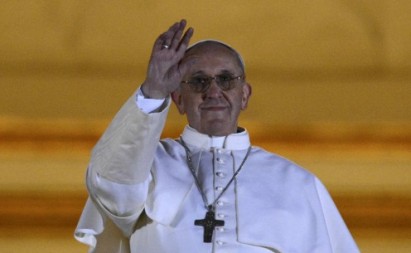
VATICAN CITY, Holy See — Pope Francis, who is suffering from a cold, has tested negative for the coronavirus, an Italian newspaper reported Tuesday, as Italy battles Europe's worst outbreak.

Vatican spokesman Matteo Bruni did not respond to a request for comment on the report in the Messaggero newspaper.


Francis canceled a Lent retreat for the first time in his papacy this weekend, after axing all public meetings at the end of last week over the cold.

The new coronavirus has spread from China across much of the world, with Italy among the worst affected with over 2,000 people infected and 52 deaths.

The 83-year-old pontiff has been seen coughing and blowing his nose, but the Vatican on Sunday quickly shot down speculation that the pope himself had come down with COVID-19.


The Messaggero report did not say when Francis had been tested for the disease.

Agence France-Presse

Sunday, July 29, 2018

Pope accepts resignation of McCarrick after sex abuse claims


VATICAN CITY  — In a move seen as unprecedented, Pope Francis has effectively stripped U.S. prelate Theodore McCarrick of his cardinal's title following allegations of sexual abuse, including one involving an 11-year-old boy. The Vatican announced Saturday that Francis ordered McCarrick to conduct a "life of prayer and penance" before a church trial is held.

Breaking with past practice, Francis decided to act swiftly on the resignation offered by the emeritus archbishop of Washington, D.C., even before the accusations are investigated by church officials. McCarrick was previously one of the highest, most visible Catholic church officials in the United States and was heavily involved in the church's yearslong response to allegations of priestly abuse there.

Francis received McCarrick's letter offering to resign from the College of Cardinals on Friday evening, after a spate of allegations that the 88-year-old prelate had for years sexually abused boys and had sexual misconduct with adult seminarians.


The pope then ordered McCarrick's "suspension from the exercise of any public ministry, together with the obligation to remain in a house yet to be indicated to him, for a life of prayer and penance until the accusations made against him are examined in a regular canonical trial," the Vatican said.

The McCarrick case posed a test of the pontiff's recently declared resolve to battle what he called a "culture of cover-up" of similar abuses in the Catholic church's hierarchy.

McCarrick had already been removed from public ministry since June 20, pending a full investigation into allegations that he fondled a teenager more than 40 years ago in New York City. McCarrick has denied these allegations.

Another alleged victim, James , says McCarrick exposed himself to him when he was 11 and continued a sexually abusive relationship with him for more than two decades. McCarrick has not responded publicly to these accusations.

Asking to be identified by only his first name to protect his family's privacy, James told The Associated Press on Saturday that he hopes the pope's approval of McCarrick's resignation will help other victims "become free."

"Basically, truth always prevails," said James, who lives in Virginia. "Thankfully, everybody in today's world is more understanding of the harm done by individual priests, and now we can start to heal," he added.

McCarrick's alleged sexual misconduct with adults was reportedly brought to the Vatican's attention years ago, including before McCarrick was appointed to the prestigious archbishop post in the U.S. capital in 2000 by then-pontiff John Paul II.

Two dioceses in New Jersey, Newark and Metuchen, say they have settled two of three complaints of misconduct by McCarrick toward adults.

The Vatican on Saturday didn't say where McCarrick would be confined nor when a church trial might begin, and its brief statement did not even allude to the grave accusations against the prelate.

McCarrick rose steadily and swiftly up the U.S. church's ranks, from auxiliary bishop in New York City, to bishop in Metuchen, to archbishop of Newark, and then to Archbishop of Washington, D.C.

A Catholic University canon law expert, Kurt Martens, noted this was the first time an order of penance and prayer had been issued before a church trial.

Other U.S. Catholics who follow sexual abuse scandals hailed stripping McCarrick of his cardinal's rank as an unprecedented shift in how the Vatican has dealt with allegations against top churchmen.

"The Vatican almost never moves at this speed," said Terence McKiernan, of BishopAccountability.org.Inc., a Massachusetts-based group that tracks clergy sexual abuse cases.

The pope appears to "understand the gravity of the situation and further harm to the Catholic church's status," he told the AP.

McKiernan wondered if the church investigation will reveal who among its hierarchy knew about the sex allegations against McCarrick and whether the Vatican will move to punish those clerics as well. He noted that the Vatican statement didn't spell out why the pope was disciplining the cardinal.

"We're still in the old world," McKiernan said, referring to the Vatican's avoidance of details about the abuse allegations against McCarrick. "(Still) it's a remarkable development."

In the case of Scottish Cardinal Keith O'Brien, accused by former seminarians in 2013 of sexual misconduct, Francis only accepted his resignation after the Vatican's top abuse prosecutor conducted a full investigation, two years after the first revelations, and after the prelate himself relinquished the privileges that come with a cardinal's rank.

O'Brien, who died earlier this year, still remained a cardinal, however.

The Rev. James Martin, editor-at large at America Magazine, which covers church issues, noted in a tweet that Bernard Law was allowed to stay a cardinal after he resigned as Boston archbishop, following revelations that he had sanctioned the systematic cover-up of pedophile priests while presiding over that U.S. diocese.

After resigning from his Boston post, Law was transferred to a prestigious job at a Rome basilica, an appointment that triggered outrage from many abuse survivors. That happened under Pope John Paul II, who was widely considered to have underestimated the scope of the sex abuse scandals worldwide.

One of Francis' closest advisers, Cardinal George Pell, is the highest-ranking Catholic in the world to be charged in the church's global abuse scandal. The 77-year-old faces trial in his native Australia on decades-old child sex abuse allegations. Pell has denied wrongdoing. Details of the allegations haven't been made public.

Bishops have been implicated in the sexual abuse scandals that have stained the Catholic church's reputation worldwide for decades, most often for their roles in covering up for pedophile priests by shuffling them from parish to parish and keeping the faithful in the dark about the allegations.

Earlier this month, an Australia bishop became the most senior Roman Catholic cleric to be convicted of covering up child sex abuse. Adelaide Archbishop Philip Wilson was sentenced to 12 months in detention by an Australian court in a landmark case seen as a strong warning to institutions that fail to protect children.

Critics of the Vatican's handling of abuse cases point out that despite recommendations from its advisory panel, the Holy See still hasn't set up a tribunal or other system to deal with accused bishops or cardinals.

It still is unclear just what church tribunal would decide McCarrick's case.

"That system is going to (have to) be created exactly for this most embarrassing and prominent case," McKiernan said.

___

Richmond, Virginia-based reporter Sarah Rankin and Rome-based reporter Nicole Winfield contributed to this report.

source: philstar.com

Friday, January 15, 2016

15 YEARS OF WIKI | George W. Bush page most edited on Wikipedia


SAN FRANCISCO, California — Former US president George W. Bush may no longer be able to change the course of history — but it has not stopped others trying for him.

To mark its 15th anniversary Friday, online encyclopedia Wikipedia released a ranking of its pages based on how many edits have been made by volunteers — edits can mount at Wikipedia pages when people or subjects incite passion or rival perspectives.

Bush, in office from 2001 to 2009, topped the list with 45,862 edits to his Wikipedia page, coming in about 3,000 edits ahead of the World Wrestling Entertainment roster page.

The list of the top-10 most edited pages went on to include, in order, the United States, Wikipedia itself, Michael Jackson, Jesus and the Catholic Church.

Rounding out the list were programs broadcast by Philippines television network ABS-CBN, US President Barack Obama and Adolf Hitler.

Since its launch on January 15, 2001, Wikipedia has grown to more than 36 million articles, with approximately 80,000 volunteer editors contributing to the website, according to the nonprofit Wikimedia Foundation behind it.

Separately, Pew Research Center released a study detailing which subjects are most popular on Wikipedia in different languages.

The most visited article in the English version of Wikipedia was “List of deaths by year,” which racked up more than 20.8 million page views last year alone, the research showed.

The most popular Chinese-language articles included the 1989 Tiananmen Square protests, mention of which is strictly taboo in China and heavily censored.

The top four Japanese language Wikipedia pages were devoted to pop groups, and the fifth was an article about organized crime group Yamaguchi-gumi.

Volleyball, basketball and football, along with Wikipedia itself and the periodic table of elements, were among the most popular articles in Spanish.

“Wikipedia seemed like an impossible idea at the time: an online encyclopedia that everyone can edit,” founder Jimmy Wales said.

“However, it has surpassed everyone’s expectations over the past 15 years, thanks to the hundreds of thousands of volunteers around the world who have made Wikipedia possible.”

Wikipedia has expanded to include 280 languages and averages more than 18 billion page views monthly, making it one of the world’s most visited websites, according to Pew.

source: interaksyon.com

Thursday, September 24, 2015

Pope wows Washington but takes on controversial church sex abuse, immigration, climate change


WASHINGTON DC - Pope Francis received a rapturous welcome to Washington on Wednesday but did not shy away from controversy, addressing church sex abuse and urging action on immigration and climate change.

President Barack Obama was clearly delighted to welcome to the White House a pontiff who can lend moral and spiritual force to his own priorities, but others may be left uncomfortable by the pope's stances.

Meeting Catholic bishops in Washington, he praised their handling of the child sex abuse scandal that rocked the US church.

"I realize how much the pain of recent years has weighed upon you," he said.

"And I have supported your generous commitment to bring healing to victims…and to work to ensure such crimes will never be repeated."

The Argentine pontiff waded into another bitter US political debate when he urged the church to embrace new immigrants, speaking "not only as the Bishop of Rome, but also as a pastor from the South."

"Perhaps it will not be easy for you to look into their soul. Perhaps you will be challenged by their diversity. But know that they also possess resources meant to be shared," he said.

He later moved on to conduct his first mass in North America, a ceremony to canonize a Franciscan friar who brought Christianity to California, Junipero Serra -- a figure also shrouded in controversy.

Native Americans hold Serra responsible for the suppression of their centuries-old culture and the death of many thousands of their ancestors.

Consternation over his elevation to sainthood did not overshadow the visit, however, and Francis was cheered by euphoric crowds with breathless wall-to-wall televised coverage as he toured Washington's stately boulevards.

'Welcoming the stranger'

Obama, America's first black president, gave the first Latin American pope an effusive welcome to the White House, praising his moral leadership.

"I believe the excitement around your visit must be attributed not only to your role as pope, but to your unique qualities as a person," Obama said, praising Francis' humility, simplicity, and generosity of spirit.

Though Francis has inveighed against the materialism that the United States seems to embody like no other country, he is also a potential political ally for Obama, sharing many of his progressive goals and bringing along many of America's 70 million Catholics.

Speaking in fluent, if accented, English, the 78-year-old returned the warm blessings of his host.

"As the son of an immigrant family, I am happy to be a guest in this country, which was largely built by such families," he said.

Francis said he would address Congress "to offer words of encouragement to those called to guide the nation's political future in fidelity to its founding principles."

Obama lauded Francis for reminding the world that "the Lord's most powerful message is mercy."

"That means welcoming the stranger with empathy and a truly open heart, from the refugee who flees war-torn lands to the immigrant who leaves home in search of a better life," Obama said.

Their message may also resonate strongly in a Europe convulsed by a refugee crisis.

And, as many US conservatives question the very existence of man-made climate change, Francis and Obama made a de facto joint appeal for action.

"Holy Father, you remind us that we have a sacred obligation to protect our planet, God's magnificent gift to us," Obama said.

Francis took up the call.

"Accepting the urgency, it seems clear to me also that climate change is a problem which can no longer be left to a future generation," Francis said.

Pomp and circumstance

The pope was afforded a full ceremonial welcome and a 40-minute one-on-one meeting with Obama in the Oval Office.

But the White House held off a planned 21-gun salute that would not have chimed with the pope's stature as a man of peace.

That was the only expense spared during a historic first visit to Washington -- a political city that shrugs when presidents, queens, and sheikhs roll through.

The visit was a political mirror of Pope Benedict's 2008 visit to George W. Bush's White House. Those two leaders were as conservative as their successors are progressive.

Still, the White House insisted it is not co-opting a holy man in order to batter Republican foes in Congress.

"The goal of the pope's visit, and certainly the goal of the meeting was not to advance anyone's political agenda," said White House spokesman Josh Earnest.

The Vatican played a crucial role in brokering talks between Cold War foes Havana and Washington that led to the recent restoration of diplomatic ties.

But the pope told reporters that he would not specifically bring up Washington's embargo of Cuba in his speech Thursday before American lawmakers, who largely favor a tough line with Havana.

Republicans are already crying foul.

Congressman Paul Gosar, who is Catholic, declared he would boycott the pontiff's address to protest his "leftist" views.

'The people's pope'

Nevertheless, there is no mistaking the political value of enlisting a popular pope's moral authority.

Seven out of ten Americans have a favorable impression of Francis, according to a Washington Post-ABC poll.

The pontiff will make two speeches during his visit, the address to Congress and another to the United Nations on Friday.

He will wrap up his historic six-day US trip on Saturday and Sunday in Philadelphia at an international festival of Catholic families.

source: interaksyon.com

Saturday, March 14, 2015

Pope Francis declares special Holy Year of mercy


VATICAN CITY -- Pope Francis announced on Friday the Roman Catholic Church will mark an extraordinary Holy Year, one of its most important events, in which faithful make pilgrimages to Rome and other religious sites around the world.

During the last Holy Year -- or Jubilee -- in 2000, millions of pilgrims came to Rome to take part in religious festivities throughout the year.

Making the surprise announcement in St. Peter's Basilica on the second anniversary of his election, Francis said the Holy Year will focus on the topic of mercy, one of the most important themes of his papacy.

It will start on December 8 of this year and end on November 20, 2016. This will be only the 29th Holy Year in the Church since the tradition started more than 700 years ago.

Holy Years normally take place every 25 years unless a pope decrees an extraordinary one to bring attention to a particular topic or need. The next one had been scheduled for 2025.

Francis, who says he wants his Church of 1.2 billion members to be more merciful and less rigid towards sinners, said the Jubilee would be an occasion for all members -- and the Church itself -- to rediscover the need to be forgiving and generous.

"The Church is the home that accepts everyone and refuses no one ... the greater the sin, the greater the love that the Church should show towards those who convert," he said.

During a Holy Year, one of the entrances to St. Peter's Basilica, which is known as the Holy Door and normally bricked up, is opened so pilgrims can pass through it. The Holy Doors of Rome's other basilicas are also opened.

According to the Vatican website, a Holy Year should be a time of reconciliation with adversaries and an occasion to promote solidarity, hope and justice in the world.

Faithful who make pilgrimages to religious sites or do good works during a Holy Year can receive indulgences, or the remission of punishment for sins, under certain conditions.

The Vatican said the official proclamation of the Holy Year, known as a papal bull, will be published next month. Cathedrals and other religious venues around the world are expected to be designated at national pilgrimage sites.

The last extraordinary Holy Year was called in 1983 by Pope John Paul II to mark the 1,950 years after the death of Jesus.

source: interaksyon.com

Wednesday, January 1, 2014

Pope calls for global solidarity in New Year blessing


VATICAN CITY - Pope Francis on Wednesday called for greater solidarity in the world in his first New Year blessing as pontiff in front of crowds of pilgrims on St Peter's Square.

"We all have a responsibility to act so that the world may be a community of brothers who respect each other, who accept their diversity and who take care of one another," the pope said on Catholic World Peace Day.

The first pope from Latin America said violence and injustice "cannot leave us indifferent or immobile" and said 2014 should bring "a real commitment to build a society with more justice and more solidarity".

"We have to stop on this road of violence! What is happening in the heart of man? In the heart of humanity? We have to stop!" the pope said.

Francis said he hoped that greater "fraternity" and a "cry for peace" from war-torn parts of the world would encourage more dialogue and "tear down walls that prevent enemies from seeing each other as brothers".

At a New Year mass in St Peter's Basilica earlier on Wednesday, Francis prayed in his homily for people "who hunger and thirst for justice and peace" in the world.

He also called on the faithful to show "strength, courage and hope" in the year to come, speaking in his homily in front of thousands of people in the church.

Francis was elected in March 2013 following his predecessor Benedict XVI's momentous resignation -- a first for the Catholic Church since the Middle Ages.

His down-to-earth style and commitment to reforming the Vatican have raised hopes in the Roman Catholic Church following a years of turmoil due to shocking child sex abuse scandals and growing secularization in the West.

The 77-year-old Francis has called for the Church to reach out more to the vulnerable and has said it should be a "poor Church for the poor" that is less "Vatican-centric" and gives more power to local bishops.

source: interaksyon.com

Sunday, November 10, 2013

Australian among Yolanda dead - Australia foreign affairs


SYDNEY - An Australian man widely identified as a former priest who blew the whistle on child sex abuse in the Catholic Church is among the dead from a typhoon that devastated the Philippines, according to reports.

The department of foreign affairs on Sunday said a 50-year-old New South Wales man had been killed, although it declined to confirm his identity.

But the Australian Broadcasting Corporation and other media said he was former priest Kevin Lee, who was removed from his parish responsibilities in Sydney last year after admitting to marrying a woman in secret.

Lee spoke out about abuse in the Catholic Church on an ABC program, Unholy Silence, last year. He was believed to be living in the Philippines with his Filipina wife and young baby.

Super typhoon Yolanda (international name: Haiyan) ripped through the Philippines and is now bearing down on Vietnam. A regional Philippine police chief on Sunday said 10,000 people were believed to have killed in one province alone.

source: interaksyon.com

Monday, September 30, 2013

To unify Catholics, conservative Pope John Paul II to be canonised alongside progressive John XXIII


VATICAN CITY - The Vatican said late popes John Paul II and John XXIII will be made saints at an unprecedented joint ceremony on April 27, 2014, in a bid to unite Catholic conservatives and liberals.

Pope Francis made the announcement on Monday at a meeting of cardinals known as a consistory.

The canonisations of two popular popes are set to bring hundreds of thousands of pilgrims to Rome.

The popular Polish pope John Paul and his Italian predecessor, two of modern-day Catholicism's most influential figures, will be canonised at a joint ceremony at the Vatican.

The unprecedented double sainthood for two popes is seen by Vatican watchers as an attempt to breach a traditional left-right divide in the Church.

"John XXIII is generally a hero to the church's progressive wing while John Paul II is typically lionized by Catholic conservatives," said John Allen, Vatican expert for the US National Catholic Reporter.

Allen said the decision could be interpreted as "a statement that any attempt to set them at odds is artificial, and that what they had in common is more fundamental than any perceived differences".

Sainthood normally requires two "confirmed" miracles, though Francis has approved the canonisation of John XXIII (1958-1963) -- with whom he shares a personal touch and reformist views -- based on just one.

John Paul II, who served as pontiff from 1978-2005, was credited with his first miracle just six months after his death, when a French nun said she had been cured, through prayer, of Parkinson's -- a disease he had also suffered from.

His second miracle was reportedly carried out on a woman in Costa Rica, who said she was healed from a serious brain condition by praying for John Paul's intercession on the same day he was beatified in 2011.

The Polish pope was popular throughout his 27-year papacy and helped topple Communism -- although he alienated many with his conservative views and was blamed for hushing up paedophile priest scandals.

At his funeral in 2005, crowds of mourners cried "Santo Subito!" -- "Sainthood Now!" -- prompting the Vatican to speed up the path to sainthood, which normally begins five years after death.

Nicknamed "The Good Pope", John XXIII made his name by calling the historic Second Vatican Council (1962-1965) which overhauled the Church's rituals and doctrines, reached out to other faiths and raised the status of lay people.

Many compare the Italian pope, who died in 1963, with the current head of the Roman Catholic Church for their similar pastoral attitudes, humble, open manner and sense of humour.

The reportedly miraculous healing of an Italian nun who had severe internal hemorrhages was attributed to John XXIII when he was beatified in 2000.

Francis is believed to have waived the need for a second miracle because his canonisation had been called for by the participants of the Second Vatican Council in 1965, who wanted to pay homage to the man who ushered the Church into modern times.

Francis also promises to be a reformist pope, planning an overhaul of the Vatican bureaucracy and finances and promising a "poor Church for the poor".

On Tuesday, he will begin three-day talks with an advisory board of eight cardinals he has appointed to help him clean up the troubled Roman Curia -- the intrigue-filled administration -- and improve communication between the Vatican and local churches.

Vatican experts say it is not clear whether details from the meetings will be made public, but liberal Catholics hope that the conciliatory tone adopted by Francis on many issues will translate into action.

Topics may include the role of women in the Church, whether priests should be able to marry, if Catholics who remarry should receive the Eucharist and the Church's position on homosexuality and gay clergy.

source: interaksyon.com

Saturday, September 28, 2013

Poland's Catholic church apologizes as pedophile scandal spreads


WARSAW - Poland's powerful Roman Catholic church on Friday apologized over two alleged pedophile priests as prosecutors on both sides of the Atlantic began probing the men, one a former Vatican envoy.

Prosecutors in the Dominican Republic have asked Interpol to arrest fugitive Polish priest Wojciech Gil, 36, who allegedly abused several young boys while serving on the Caribbean island.

A Vatican probe is already under way into allegations of child sex abuse against Archbishop Jozef Wesolowski, a 65-year-old Pole who served as papal envoy in Santo Domingo for around five years.

Senior Polish church officials said they were unaware of the whereabouts of both men on Friday as prosecutors in Warsaw also launched criminal investigations against them.

"Trust in the church is waning. We are sorry. This is the least we can do," Bishop Wojciech Polak, a senior official with the Polish episcopate, told reporters on Friday.

The church would however not offer victims any material compensation, he said in Warsaw.

"The scale of pedophilia in the church in Poland is unknown," Jesuit priest Adam Zak, responsible for child and youth welfare in the Polish episcopate, said at the same press conference.

"The cases that end up in court are just the tip of the iceberg," he said, pointing to 27 priests convicted of child sex abuse in Poland over the last decade.

In the latest scandal to make headlines, a Warsaw priest who was convicted of committing so-called "other sexual acts" continued to work with children, with the full consent of his superiors.

Unlike the United States or Ireland, the string of crimes in heavily Catholic Poland has not provoked widespread public outcry.

Wesolowski was recalled by the Vatican on August 21 after the allegations of abuse surfaced.

He is suspected of engaging in sexual relations with underage prostitutes in the historic center of the Dominican capital, Santo Domingo, according to press reports.

Reports also linked him with the fugitive Gil, accused of raping minors in the city of Santiago, about 155 kilometers (96 miles) north of the capital.

Gil went missing in May when the allegations surfaced and he was suspended from his duties as a priest.

"We have had no contact with him since May 28," Father Tadeusz Musz, spokesman for Gil's order of the Michaelite Fathers, said at the press conference.

Bishop Polak added that Wesolowski had served under the Vatican's jurisdiction and was not "an archbishop in Poland or a member of the Polish Episcopate".

Religious affairs experts in Poland say its powerful church is ill-prepared to deal with the pedophiles in its ranks.

"The Polish church isn't ready to confront this issue. It's a rigid institution, very bureaucratic, detached from reality and certain of its power," Warsaw-based sociologist Pawel Boryszewski told AFP Friday.

"These cases could fuel a wave of criticism against the church."

Wesolowski was ordained in 1972 by then-Archbishop of Krakow, Cardinal Karol Wojtyla, who later became Pope John Paul II.

The late pontiff named Wesolowski the Vatican's envoy to Bolivia. He was later posted to several Asian countries before being dispatched to the Dominican by former pope Bendict XVI in 2008.

Earlier this month, Pope Francis came under fire from victims groups following news he had quietly sacked Wesolowski.

Pope Francis has vowed to crack down on abuse in the Catholic Church, reiterating the zero-tolerance approach taken up by his predecessor Benedict XVI after a wave of revelations.

source: interaksyon

Tuesday, March 19, 2013

Pope Francis officially begins ministry in ceremony at St Peter's Square


VATICAN CITY (AP) - Pope Francis has officially begun his ministry as the 266th pope, receiving the ring symbolising the papacy and a wool stole symbolising his role as shepherd of his 1.2-billion strong flock.

A cardinal intoned the rite of inauguration at the start of Tuesday's Mass, saying "the Good Shepherd charged Peter to feed his lambs and his sheep; today you succeed him as the bishop of this church."

Later a half-dozen cardinals approached the Argentine-born pope to vow their obedience.

The installation occurred in sun-drenched St. Peter's Square before tens of thousands of people, princes, sheiks, rabbis and presidents.

source: straitstimes.com

Wednesday, March 13, 2013

Argentinian Jesuit emerges as Pope Francis


The Catholic Church has a new pope, a Jesuit, and the first pontiff from outside Europe: Argentina's erstwhile Cardinal Jorge Mario Bergoglio, who took as his papal name, "Francis".

White smoke billowed from the chimney of the Sistine Chapel at the Vatican on Wednesday evening (early Thursday, Manila time), signalling the election of the new pope to succeed the retired Pope Benedict XVI.

Bells pealed across Rome and in Christian cities around the world as the 1.2-billion-strong global Catholic community anticipated the introduction of their new leader.

Analaysts immediately read into Bergoglio's background: He is from South America, and his Jesuit background reportedly comes with a strong leaning for social justice.

Pope Francis was a darkhorse in selection of a new pope. Analysts believed the frontrunners for the papacy were from Europe - from where the majority of cardinals reside - but there was also a school of thought that reformists in the Church may go for a non-European, as most Catholics today do in fact come from the global south. Latin America, in particular, was believed to have had strong cardinal contenders, as the continent has more Catholics than any other region in the world.

Pope Benedict XVI, the former Cardinal Joseph Ratzinger, resigned suddenly last month, citing old age and failing health. Benedict's retirement threw the Catholic Church into unchartered territory, kicking off high anticipation for his successor in a modern era equipped as never before for global speculation.

Tens of thousands of pilgrims in St Peter's Square cheered and the bells of St Peter's Basilica rang out after the 115 cardinals meeting in a Vatican conclave signalled their momentous decision.

The 266th pope in the Catholic Church's 2,000-year history -- his identity is still a secret -- was due to emerge from the balcony of the basilica.

The crowd chanted "Habemus Papam!" ("We Have a Pope!") as they waited, waving flags from around the world.

Cardinals have been locked up behind the Vatican walls and cut off from the outside world since Tuesday, meeting in a sublime Renaissance chapel swept for recording devices and installed with scramblers to prevent any communication.

The smoke from the chimney was produced by burning the ballots and setting off smoke flares in two stoves specially installed in a corner of the chapel.

The decision came after five votes -- longer than for Benedict's succession to late pope John Paul II in 2005 which was decided in just four votes.

The historic election after Benedict's abrupt resignation last month was being followed around the world on live television as as well as through social media and smartphone apps -- this is the first ever tweeted conclave.

The Vatican has said the cardinal nominated to be the next pope will retire to a "Room of Tears" next to the Sistine Chapel to don his papal vestments and then pray in the Pauline Chapel before speaking on St Peter's Square.

Brazil's Odilo Scherer, Canada's Marc Ouellet and Italy's Angelo Scola -- all conservatives similar to Benedict in outlook but different in style -- were the three favourites but papal elections are notoriously difficult to predict.

Other possible candidates include Peter Turkson from Ghana, Luis Antonio Tagle from the Philippines and Timothy Dolan from the United States.

The odds have been stacked against cardinals from Africa and Asia -- two-thirds of the voter cardinals were from North America and Europe.

All the "Princes of the Church" were appointed by Benedict or his predecessor and ideological soulmate John Paul II.

But the names of cardinals from Latin America, where the largest number of the world's Catholics actually live, have also been in the rumour mill.

US President Barack Obama also chimed in on Wednesday, saying an American pope could be just as effective as any other, before quipping: "But the (US) conference of Catholic bishops... don't seem to be taking orders from me."

Benedict's eight-year papacy was riven by scandals and the new pope will face immediate challenges -- stamp his authority on the Vatican machinery and try to bring back a Catholic flock that is deserting churches across the West.

Benedict's style was often seen as too academic and he was never as popular as his predecessor. Many of the cardinals have called for a new pope who will be a good communicator, able to reach out particularly to young people.

Conclaves are usually only held after a pope dies and are sometimes decades apart -- the last one was in 2005, the one before that 1978. A popular Italian expression for things that happen very rarely is "at every death of a pope".

The 85-year-old Benedict broke with tradition, becoming the first pontiff to resign since the Middle Ages. He has said he will retire to a former nunnery inside the Vatican -- an unprecedented and delicate situation for the Church.

In one of his last acts as pope, he issued a decree allowing cardinals to bring forward the date of a conclave in cases of papal resignation -- a move seen by many as potentially setting a precedent for future ageing pontiffs.

The scandal of hushed-up sexual abuses of children by paedophile priests going back decades has also cast its shadow over the conclave.

The US group SNAP (Survivors Network of those Abused by Priests) called for over a dozen cardinals to be excluded from the conclave either for covering up abuses or making tactless remarks about the scandals.

The Vatican on Wednesday defended the cardinals and accused SNAP and other activists of showing "negative prejudices".

"None of us are surprised that they have tried to take advantage of these days to repeat their accusations and give them greater resonance," Lombardi said.

"These cardinals should be respected and have every right to be in the conclave," he said.

source: interaksyon.com

Wednesday, February 20, 2013

Pope may change conclave rules before abdication - Vatican


Pope Benedict may change Church rules governing the conclave where cardinals from around the world will meet next month to secretly elect his successor, the Vatican said on Wednesday.

Benedict was studying the possibility of making changes to laws established by his predecessor Pope John Paul before he abdicates on February 28, a spokesman said.

The changes may affect the timing of the start of the conclave. Current Church rules call for the conclave to start around March 15 but there have been indications that it could be held earlier if the rules are changed.

source: interaksyon.com

Sunday, October 21, 2012

Saint Pedro Calungsod, our model of faith and witness


Martyrs are those who stand witness for their beliefs and who give testimony to their faith.  Since the early years of the Church, there have been thousands of martyrs; people who never feared, or even if they did, stood their ground for the sake of the principles they espoused and the faith that they lived by and lived for.

Martyrs therefore are the models of the faith, especially those who believed and followed Jesus, the Christ and in effect, were persecuted, imprisoned, tortured and killed.  Martyrs did not renounce their faith and remained true to their beliefs even if the consequence meant death.

Today, October 21, 2012, the Catholic Church and all Filipinos worldwide are one in thanking the Lord for the gift of faith and witness of one of our very own.  As  Christians and as Catholics, we  joyfully celebrate the life and faith  of Blessed Pedro Calungsod and six others who will be elevated to the altar of God and will be known as “holy men and women” of  the Church and in the world.  They will be canonized by His Holiness Pope Benedict XVI and will be declared  and given the title fitting to them. As they are declared Saints (or Holy Men and Holy Women), they  can now be publicly venerated by the  Church.

Saint Pedro Calungsod was a Visayan who joined the missions in the Marianas in the 17th century.  He was a lay young man who worked in the evangelization and proclamation of the gospel to the Chamorros, the indigenous people who lived at that time in islands of the Marianas.  He helped and assisted Blessed Diego de Sanvitores, a Spanish Jesuit in work of catechesis and in the delivery of the   sacraments to  the people.

This young man who made a decision to be a missionary gives us an idea of who he is.  A person with a certain level of maturity in his faith so that he committed himself to join the mission and dedicated his life in the following of Jesus in his capacity a lay young man.   He was not only willing to go but made himself available for others as well.  He was a catechist as he taught to the people the Story of Jesus and his saving message  of love.  We know in history that during those times, going to missions was very hard and it was possible that one would not be able to return.  It was really a decision of faith and loving service that he made for the sake of the gospel.

At 17, San Pedro Calungsod was killed  on April 2, 1672 in Tumon, Guam together with Blessed Diego de Sanvitores when they were suspected by some villagers that  the water used in baptism has poison.  Their stories never ended after they died because their lives were the very witness of faith. After 340 years, that young Visayan martyr is recognized by the Church as a “Beloved of Christ” and worthy recipient of the crown of sainthood.

May Saint Pedro Calungsod be our model of faith, of witness, of service.  He is not only a model for the young people but for all of us who want to share God’s good news to everyone.  May we also follow Jesus and be His witness, like the young martyr named Pedro Calungsod, for at 17 he made a difference in his life and faith.

Saint Pedro Calungsod, pray for us and be our model faith and witness.

source: interaksyon.com

Thursday, October 18, 2012

Pilgrim image of Blessed Pedro Calungsod now in Rome


CEBU CITY -- The pilgrim image of Blessed Pedro Calungsod arrived in Rome, Italy at about 8 a.m. Wednesday, according to Fr. Mhar Balili, a member of the liturgical committee for the Calungsod canonization in Rome.

Calungsod’s canonization, the Philippines’ second saint and the first Visayan martyr of the Catholic Church, is set on Sunday, Oct. 21.

Calungsod’s image was accompanied by Fr. Charles Jayme, the custodian of the image, aboard a Cathay Pacific flight.


The Cathay Pacific aircraft carrying the image took off from the Mactan Cebu International Airport at 12:56 p.m. Tuesday.

It arrived in Hong Kong at 3:15 p.m. and left at midnight for Rome.

The image occupied a passenger seat next to Father Jayme.

Jayme said being the custodian of the image is “a once-in-a-lifetime experience.”

An estimated 20,000 people in the cities of Cebu, Mandaue and Lapu-Lapu went out to the streets waving palm leaves, small flags and Calungsod’s pictures Tuesday morning to send off the image of the teenaged martyr.

A convoy of nearly 100 vehicles accompanied the red pickup that carried the three-foot-tall image from Cebu City to Mandaue City and then to the Mactan airport.

More than 200 pilgrims were on the same flight with the pilgrim image of Blessed Pedro Calungsod.

A teenaged catechist, Calungsod was part of a Jesuit mission sent to teach catechism at the Ladrones Islands or the Marianas Islands in the late 1600s.

He served as the "sacristan" of Blessed Diego Luis de San Vitores. They were killed when they tried to baptize one of the natives.

Calungsod was beatified by Blessed Pope John Paul II in March 2000.

source: interaksyon.com

Sunday, August 5, 2012

Students have their faces painted with anti-RH bill signs


The United Nations warned Sunday that failure to pass a controversial birth control law in the Philippines could reverse gains in development goals amid stiff opposition from the powerful Catholic church.

The bill seeks to make it mandatory for the government to provide free contraceptives in a country where more than 80 percent of the population is Catholic and which has one of the highest maternal mortality rates in Southeast Asia.

Ugochi Daniels, country representative from the UN Population Fund, said she remained "cautiously optimistic" that President Benigno Aquino III's allies who dominate the House of Representatives could muster the numbers to pass the bill on Tuesday after 14 years of often divisive debate.

"What is important now is to highlight the urgency of the bill," Daniels said.

The UN, in a separate statement, said the Philippines was unlikely to achieve its millennium development goal of reducing maternal deaths by three quarters and providing universal access to reproductive health by 2015.

"The United Nations believes that apprehensions such as exposure of people to risks of contraceptive use, encouragement of sexual promiscuity and legalization of abortion have no basis. Instituting a reproductive health policy is consistent with the government’s duty under the Constitution to protect and promote the right to health of the people and instill health consciousness among them," the UN said.

"Reproductive health is not about population numbers. It is about ensuring a life of health and dignity ... Time spent discussing these issues repeatedly is measured by the lives of the 15 women we lose to maternal deaths every day," it added.

The body said it had "extensively studied" the proposed law which once passed could "vastly improve health and quality of life" in a country where a third of the population live on less than a dollar a day.

A rise in unwanted pregnancies could swell the number of people in poverty, and lead to an explosion in urban slum populations, the UN said.

And while the country has been enjoying economic expansion of more than five percent in recent years, the gains could be reversed, it warned.

"Hopes of future prosperity could turn to dust if the country is not able to deal with the population growth," the UN said.

Daniels said maternal deaths would continue to rise with more and more women getting pregnant at a young age without the proper health care and access to key reproductive information.

Between 2006 and 2010, the maternal mortality rate rose 36 percent to 221 deaths per 100,000 live births, from 162 deaths per 100,000 live births in 2000 to 2005, according to the government's 2011 Family Health Survey.

And many of those giving birth were girls between 15 and 19 years old, the UN said.

"I think we've gone from 11 (maternal deaths) a day to between 14 and 15 a day now. And unfortunately, most of these are poor women," Daniels said.

The UN Population Fund was "very concerned" about the rising number of deaths, she said, noting that even in war-torn Afghanistan the trend was downwards.

She urged Philippine lawmakers to quickly pass the bill and "stop failing our young."

"This is now the time. We have been waiting for a very long time," Daniels said.

The UN's call came as Catholic priests and nuns led thousands in a protest rally in Manila Saturday to urge lawmakers to scrap the bill.

Besides free contraception, it would also give the poor preferential access to family planning services in state hospitals, while lessons on family planning and sex education would become compulsory in schools and for couples applying for a marriage license.

The UN has said a lack of education and access to condoms has led to an explosion of HIV infections in the Philippines, which it said is now one of seven countries in the world where cases have risen by 25 percent or more since 2001.

Aquino has signaled his backing for the bill ahead of Tuesday's vote in the House of Representatives.

The Senate, the upper house of parliament, also needs to pass the bill before it can become law, but some of its leaders were seen giving their support to the church rally Saturday.

The consolidated measure of the RH bill, which was submitted to Congress in August last year, was a product of a series of dialogues between the Palace and the Catholic Bishops' Conference of the Philippines and other stakeholders.

As a result of the dialogues, the consolidated version does away with a provision to limit the number of children per family and also increased the age at which children will be given sex education in schools.

The executive branch also moved to amend a provision requiring all hospitals to carry a full-range of modern artificial family planning methods.

On Thursday, Aquino expressed hope Congress will finally end deabtes on the measureon August 7.

"Perhaps the debates should end and Congress can decide, once and for all, on the Responsible Parenthood bill," he said.

source: interaksyon.com