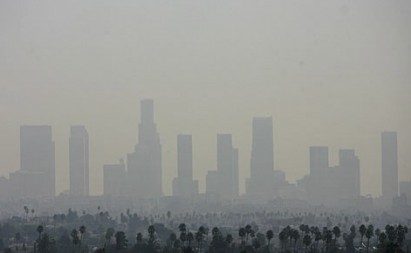
Showing posts with label Air Pollution. Show all posts

Monday, March 16, 2020

Air pollution 'likely' to cut COVID19 survival: experts


PARIS, France — Air pollution from petrol and diesel vehicles is likely to increase mortality from the novel coronavirus in cities, public health experts told AFP Monday.

The European Public Health Alliance (EPHA) warned that dirty air in urban areas that causes hypertension, diabetes and other respiratory illness could lead to a higher overall death toll from the virus currently sweeping the world.

Emissions from petrol and diesel engines were still at "dangerous" levels that could imperil the most vulnerable during this and future pandemics, said the European Respiratory Society (EPS), which is a member of the EPHA.

"Patients with chronic lung and heart conditions caused or worsened by long-term exposure to air pollution are less able to fight off lung infections and more likely to die," EPS member Sara De Matteis said.

"This is likely also the case for COVID-19," added de Matteis, who is also an associate professor in occupational and environmental medicine at Italy's Cagliari University.

The virus has so far infected more than 168,000 people and killed over 6,500 worldwide.

Several European nations have implemented unprecedented measures to prevent the spread of the disease and allow health systems to treat patients.

While there is currently no proven link between COVID-19 mortality and air pollution, one peer-reviewed study into the 2003 SARS outbreak showed that patients in regions with moderate air pollution levels were 84 percent more likely to die than those in regions with low air pollution.

COVID-19 is similar to SARS and can cause respiratory failure in severe cases.

Mortality data for COVID-19 is incomplete, but preliminary numbers show the majority of patients who die are elderly or have pre-existing chronic conditions such as heart or lung disease.

According to the European Environment Agency, air pollution leads to around 400,000 early deaths across the continent annually, despite European Union air quality directives.

One COVID-19 hotspot, northern Italy, has particularly high levels of PM10—microscopic particles of pollution due largely to road traffic.

The number of fatalities in Italy shot up by 368 to 1,809 on Sunday—more than half of all the cases recorded outside China.

Agence France-Presse

Wednesday, July 10, 2013

Air pollution boosts lung, heart risks - studies


PARIS - Long-term exposure to particulate air pollution boosts the risk of lung cancer, even at concentrations below the legal maximum, said a European study published on Wednesday.

A separate report said short-term surge in these particles or other gas pollutants in the air also increases the risk of heart failure.

European epidemiologists said they had found an unmistakeable link between lung cancer and localized air pollution by particulate matter.

The evidence comes from 17 high-quality investigations carried out among 312,000 people in nine European countries, according to the paper in The Lancet Oncology.

These earlier studies, which had already been published, were based on reliable records of the health and lifestyle of 2,095 people who died from lung cancer during an average 13-year monitoring period.

The team sourced environmental data around the individuals' home addresses, then calculated their exposure to levels of particulate matter -- the gritty residual pollution from fossil-fuel-burning power stations, cars, and factories.

Particulate matter falls into two categories: PM2.5, meaning particles measuring no more than 2.5 micrometers, 30 times smaller than a human hair, and the slightly coarser variant, PM10.

Current EU air quality standards limit PM10 exposure to a yearly average of 40 micrograms per cubic meter, and PM2.5 exposure to 25 micrograms per cubic meter per year.

The UN's World Health Organisation (WHO) has guidelines recommending that annual exposure be limited to 20 micrograms per cubic meter for PM10 and 10 micrograms per cubic meter for PM2.5.

Unexpectedly, the new study found a cancer risk at every level, and confirmed that the higher the level, the greater the risk.

The results took account of smoking, dietm and occupation -- which can skew the risk picture.

"We found no threshold below which there was no risk," said Ole Raaschou-Nielsen from the Danish Cancer Society Research Centre in Copenhagen.

"The more the worse, the less the better."

Every increase of five micrograms per cubic meter of PM2.5 drove the risk of lung cancer up by 18 percent.

And every increase of 10 micrograms per cubic meter of PM10 boosted risk by 22 percent, including for adenocarcinoma, a type of lung cancer associated with non-smokers.

In an independent comment, Jon Ayres, a professor of environmental and respiratory medicine at the Institute of Occupational and Environmental Medicine in Birmingham, central England, praised the design and scope of the study.

"There is now no doubt that fine particles are a cause of lung cancer," he told the Science Media Centre in London.

In a separate study in The Lancet, scientists at the University of Edinburgh in Scotland carried out a meta-analysis of 35 studies in 12 countries.

It looked at PM2.5, PM10, and four air pollutants: carbon monoxide, sulphur dioxide, nitrogen dioxide, and ozone.

They found that even a brief spike in exposure -- the kind that happens when a city calls a smog alert -- caused the risk of hospitalisation or death from heart failure to rise by two or three percentage points. The only exception was ozone, a well-known respiratory irritant at the ground level.

Modelling the situation for the United States, the study suggests that if the average PM2.5 were reduced by 3.9 micrograms per cubic meter, nearly 8,000 heart-failure hospitalizations would be averted each year and the country would save a third of a billion dollars annually.

source: interaksyon.com

Tuesday, June 18, 2013

US study links pollution to autism risk


WASHINGTON DC - Pregnant women who were exposed to high levels of air pollution were twice as likely to have a child with autism as women who lived in low pollution areas, a US study said on Tuesday.

According to experts at Harvard University, the research is the first large national study to examine links between the prevalence of pollution and the development of the developmental disorder.

The findings are published in the journal Environmental Health Perspectives.

"Our findings raise concerns," said lead author Andrea Roberts, a research associate in the Harvard School of Public Health Department of Social and Behavioral Sciences.

"Depending on the pollutant, 20 percent to 60 percent of the women in our study lived in areas where risk of autism was elevated," she said.

The data came from a large survey of 116,430 nurses that began in 1989.

For the analysis, researchers isolated 325 women who had a child with autism and 22,000 women who had a child without the disorder.

To estimate exposure to pollutants while pregnant, they used air pollution data from the Environmental Protection Agency, and adjusted for factors like income, education, and smoking during pregnancy.

The analysis found that women who lived in locations with the highest levels of diesel particulates or mercury in the air were twice as likely to have a child with autism as those who lived in the areas with the lowest levels.

When the pollutants included lead, manganese, methylene chloride, and combined metal exposure, women in areas with the highest levels of these pollutants were about 50 percent more likely to have a child with autism.

Autism is a brain disorder that affects as many as one in 88 in the United States, and about one in 100 in Britain.

Researchers said the findings suggest that metals and other pollutants should be regularly measured in the blood of pregnant women to give a better understanding of whether certain pollutants increase autism risk.

source: interaksyon.com